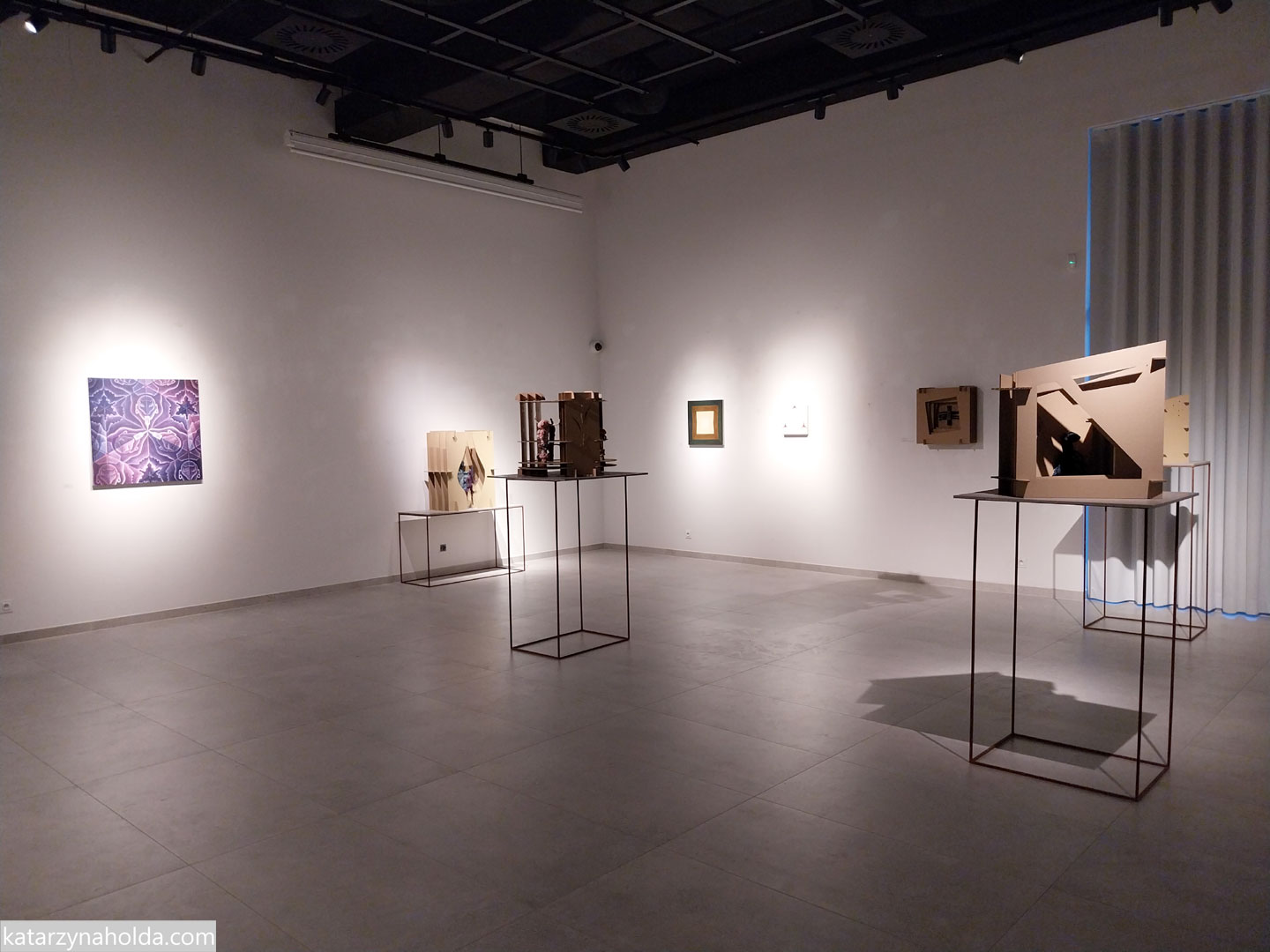
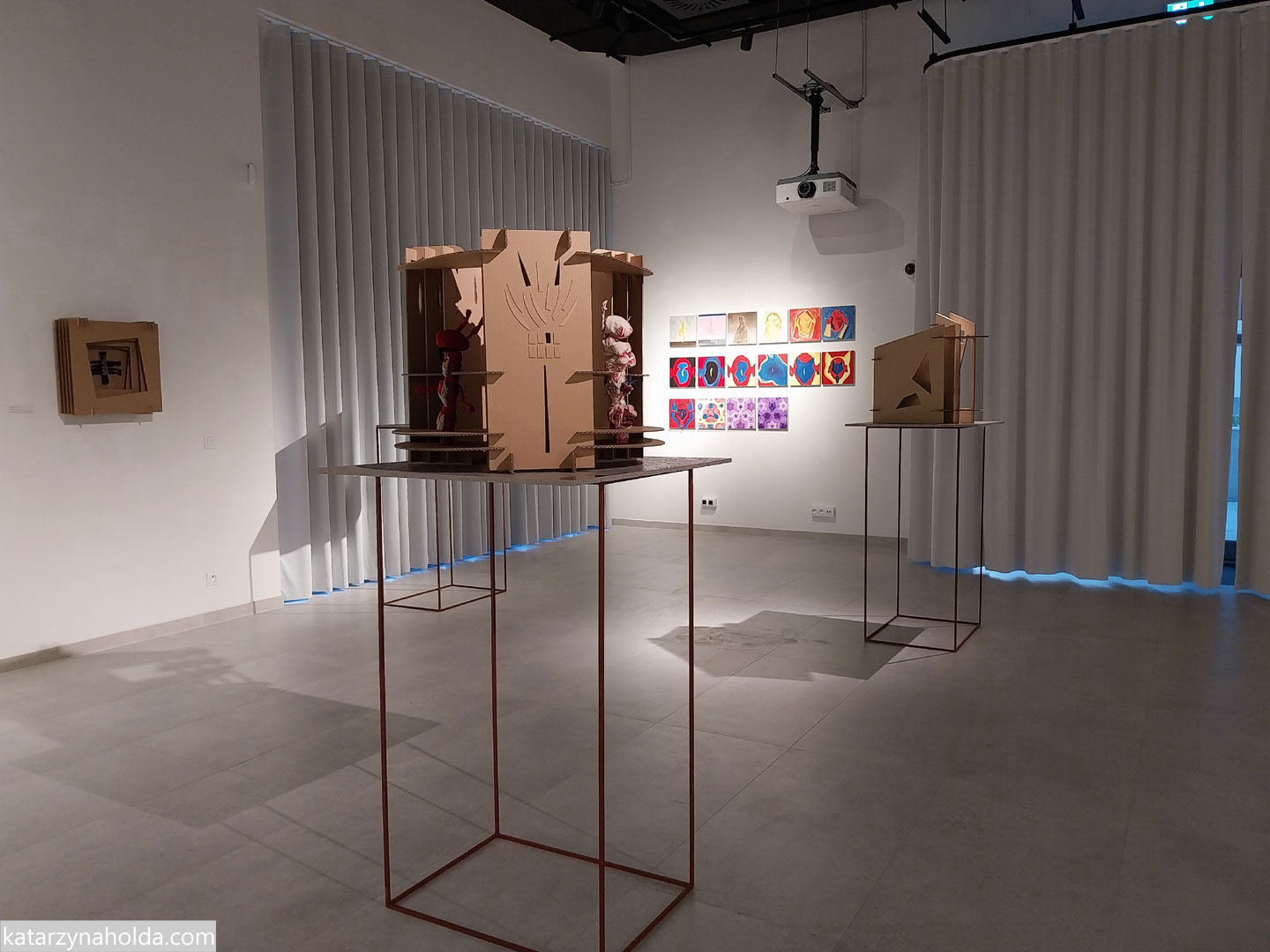
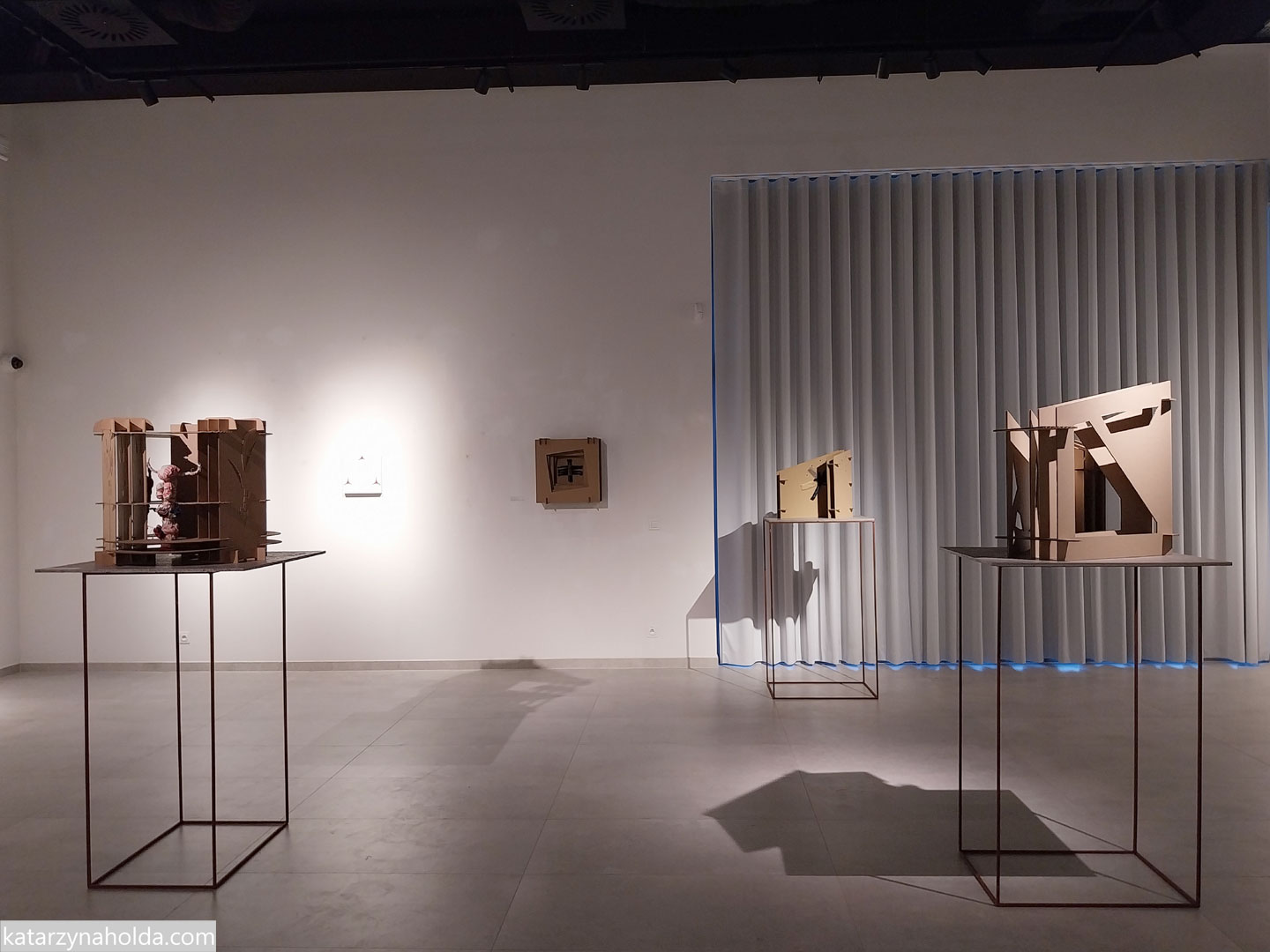
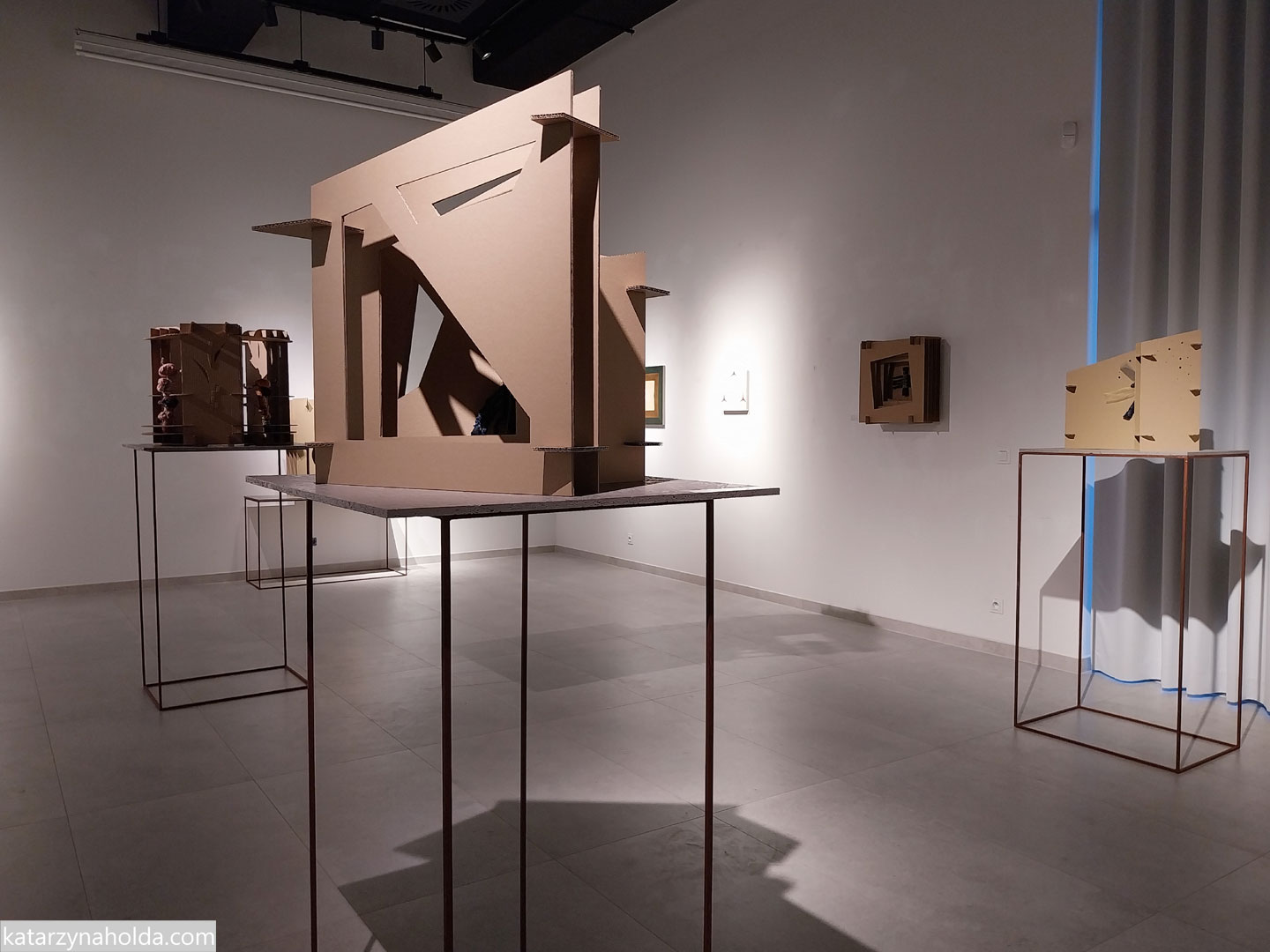
Katarzyna Hołda received her doctorate in visual arts in 2025 from the Faculty of Arts of the Maria Curie-Skłodowska University in Lublin. Hołda’s doctoral thesis Bios and Zoe includes painting, objects (dolls in scenographies) and a theoretical dissertation.
Supervisor: Dr Kamil Stańczak, UMCS Lublin.
Reviewers: Prof. Jadwiga Sawicka, University of Rzeszów; Prof. Iwona Demko, Academy of Fine Arts in Krakow; Prof. Jan Mioduszewski, Academy of Fine Arts in Warsaw.
The Bios and Zoe cycle refers to the ancient Greek concept of life as the interpenetration of two elements: Bios and Zoe. Bios – mortal, material life. Zoe – the immaterial, sacred and eternal life-energy that is continually reborn in the Bios; it incarnates into any matter and, after its death, into another. There is no personal deity as a separate entity; the deity is life and nature itself.
Today, at a moment of turning point in European culture, we are looking for a new religious paradigm. To build a new religious metaphor we can draw on traditional motifs of our culture, such as symbols, folklore, festivals or rituals.
Forefathers and Kupala (Midsummer) Night are universal festivals with pre-Christian roots. Kupala Night is the festival of the summer solstice and refers to the exuberance of nature and fertility – it is therefore a celebration of the rebirth of matter – the festival of Bios. Forefathers is the feast of the dead and of reincarnation – the rebirth of the souls of ancestors and our own in successive human, animal and all other entities. Dziady is therefore a celebration of Zoe.
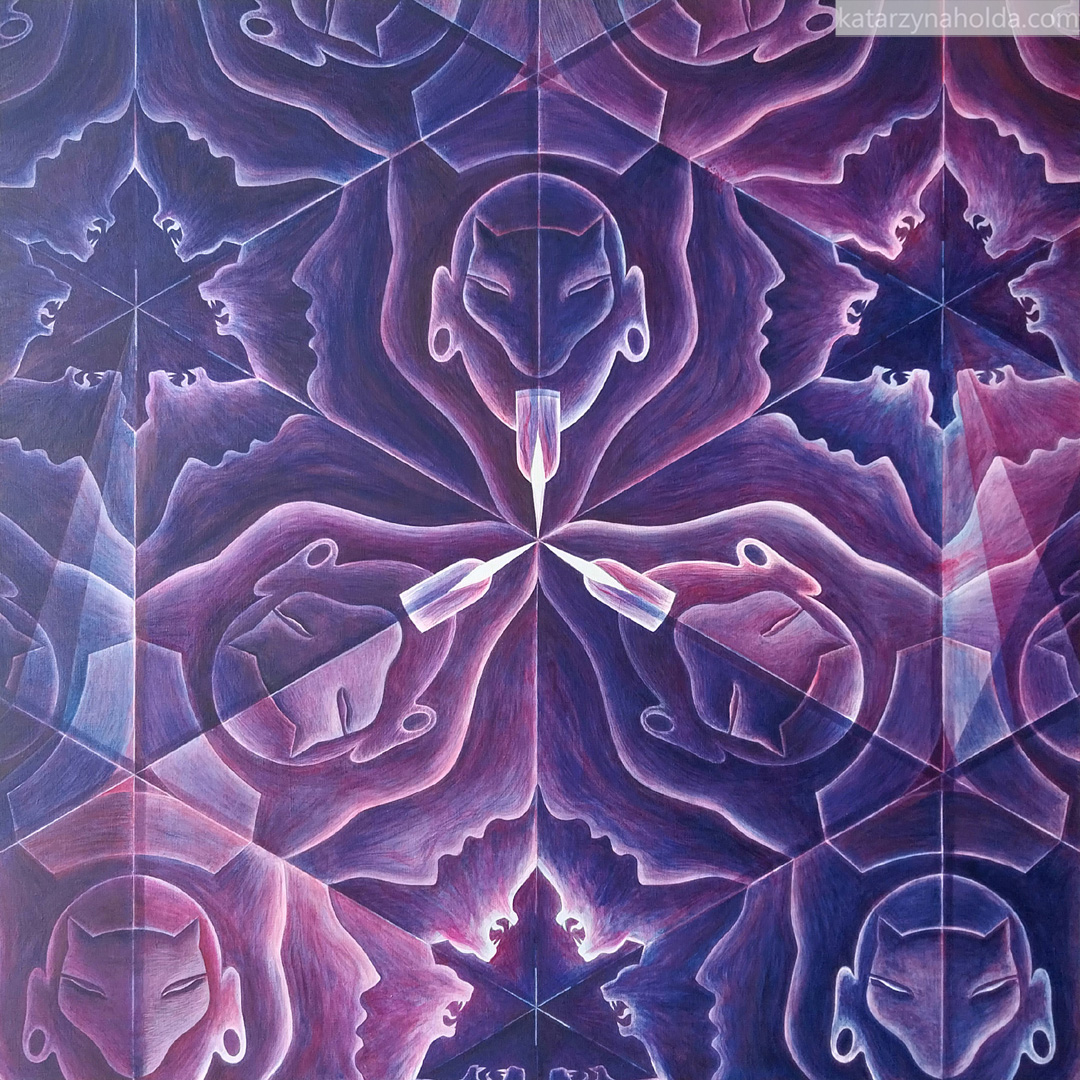
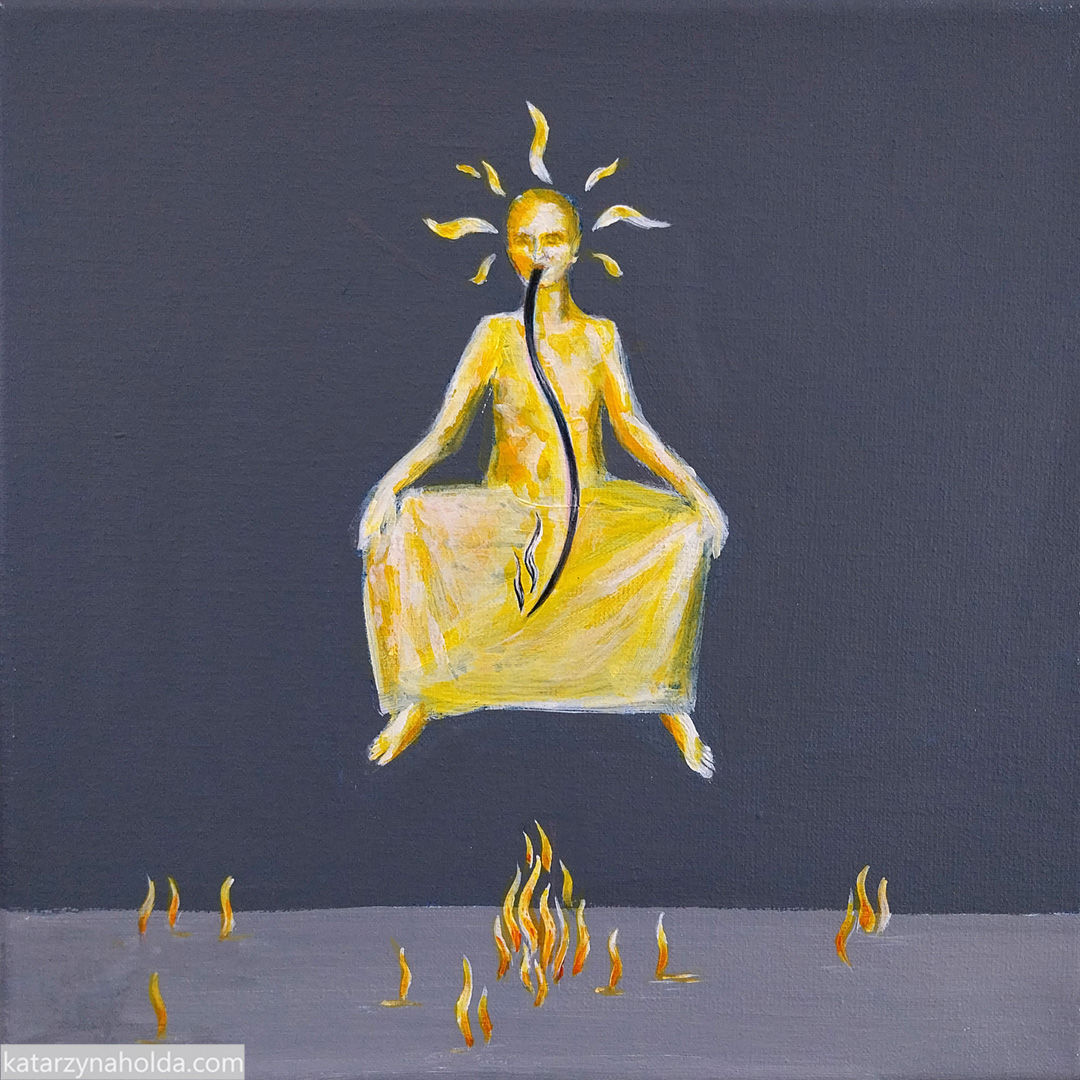
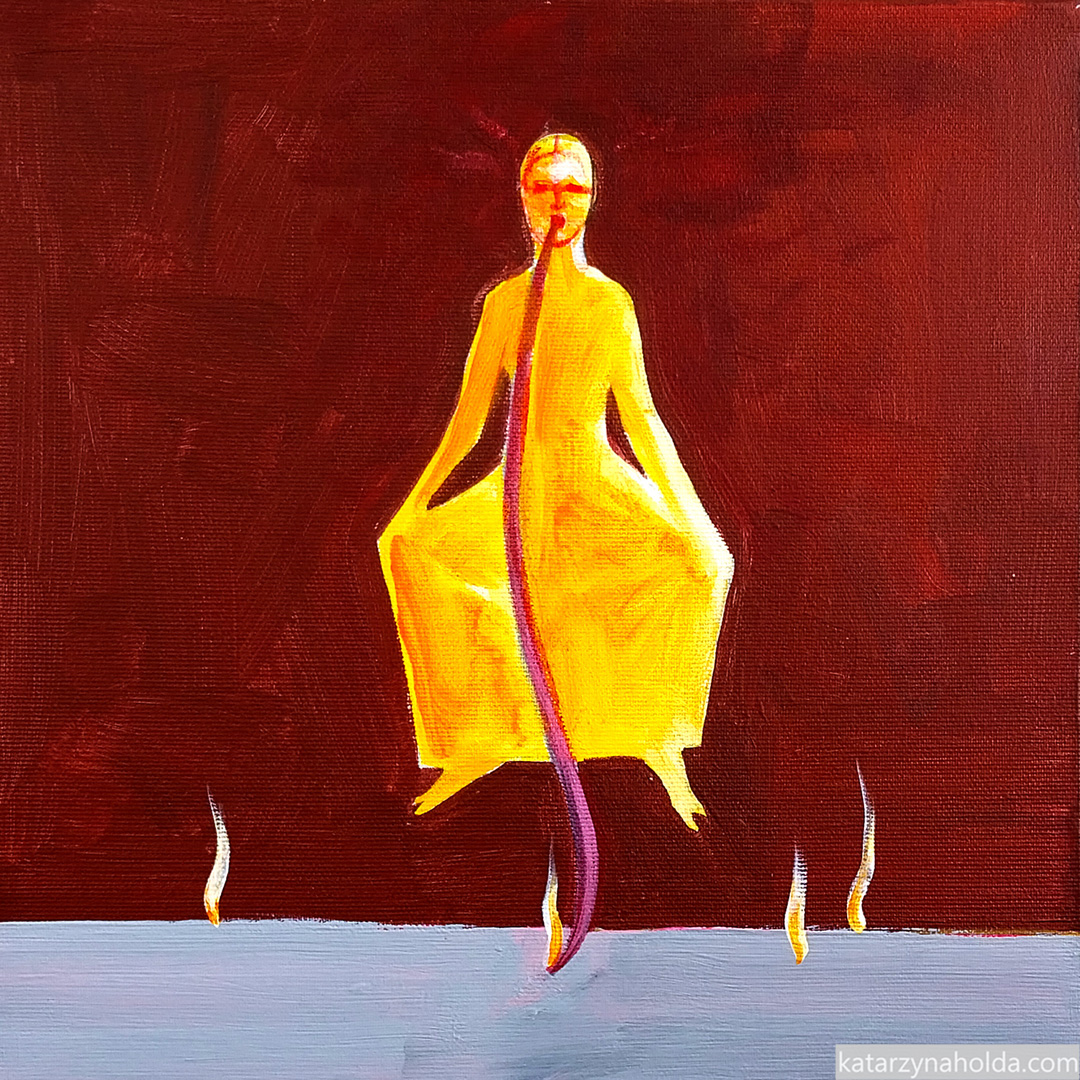
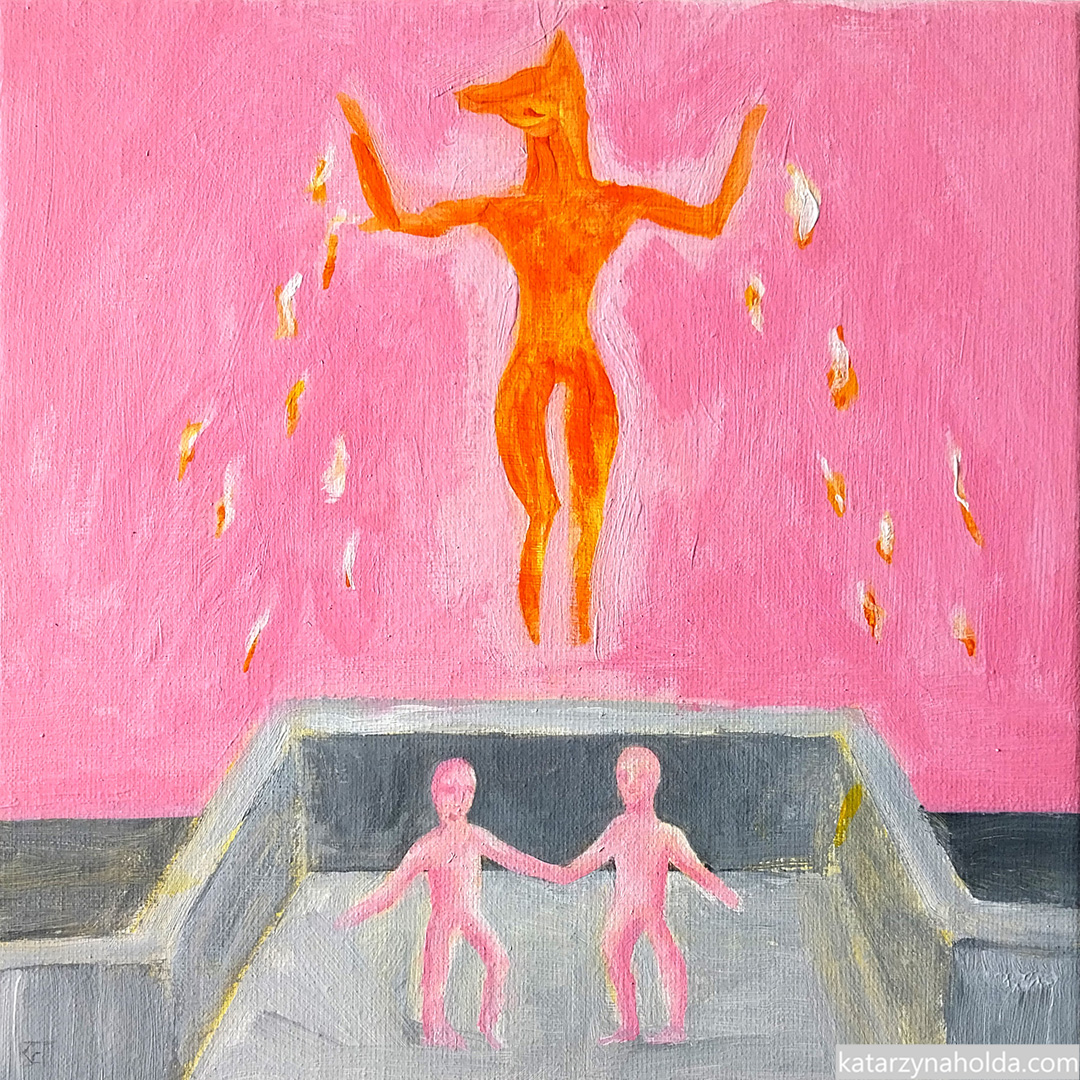
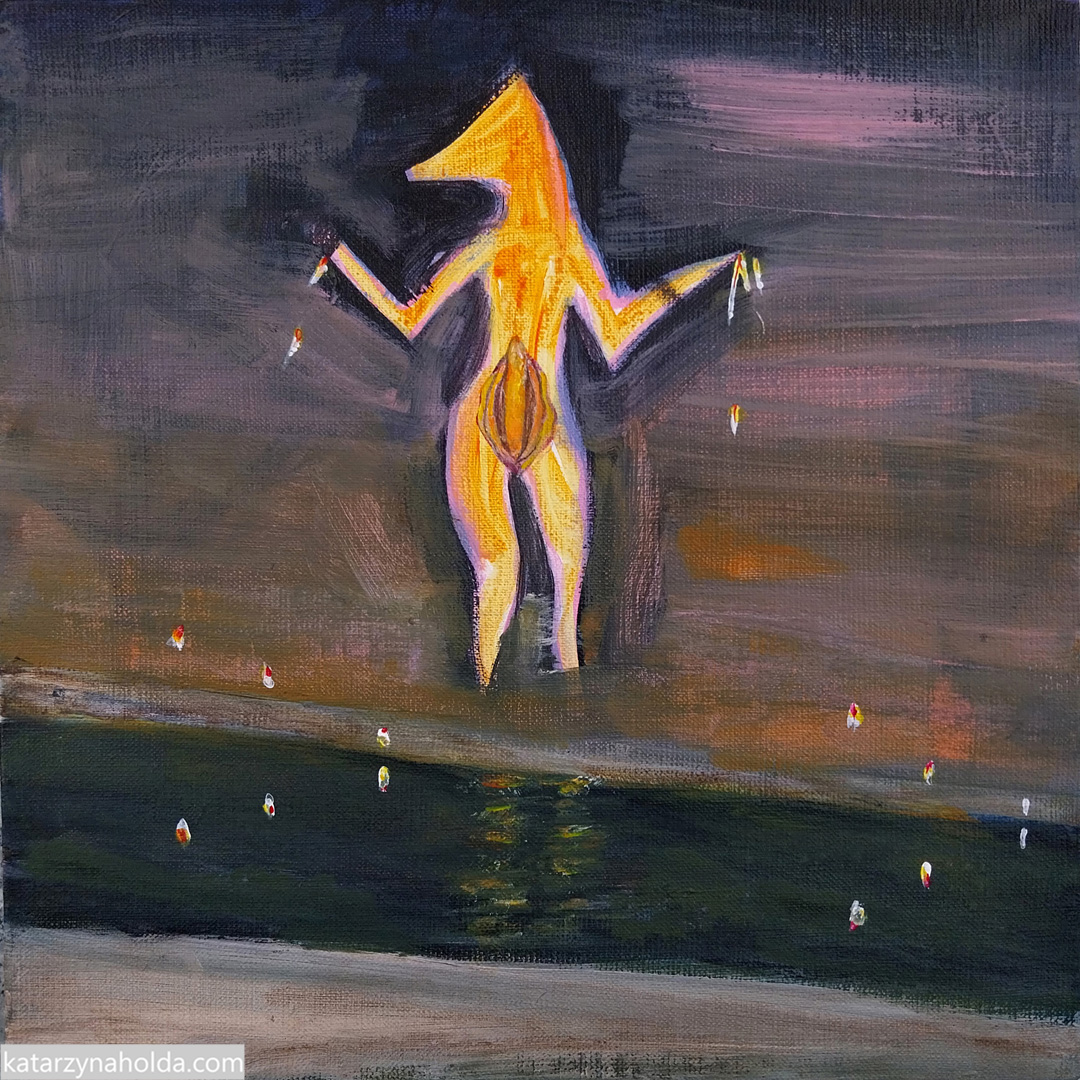
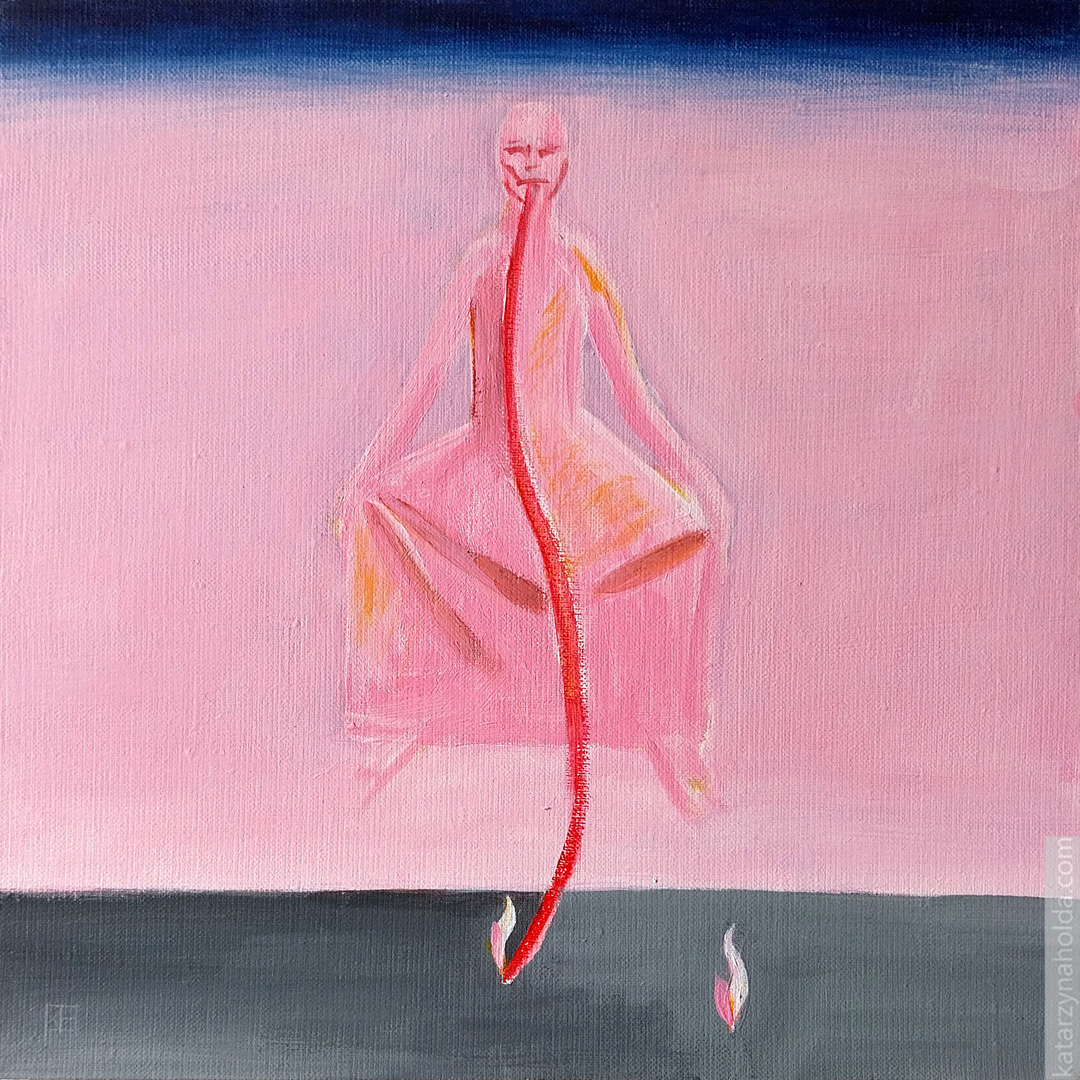
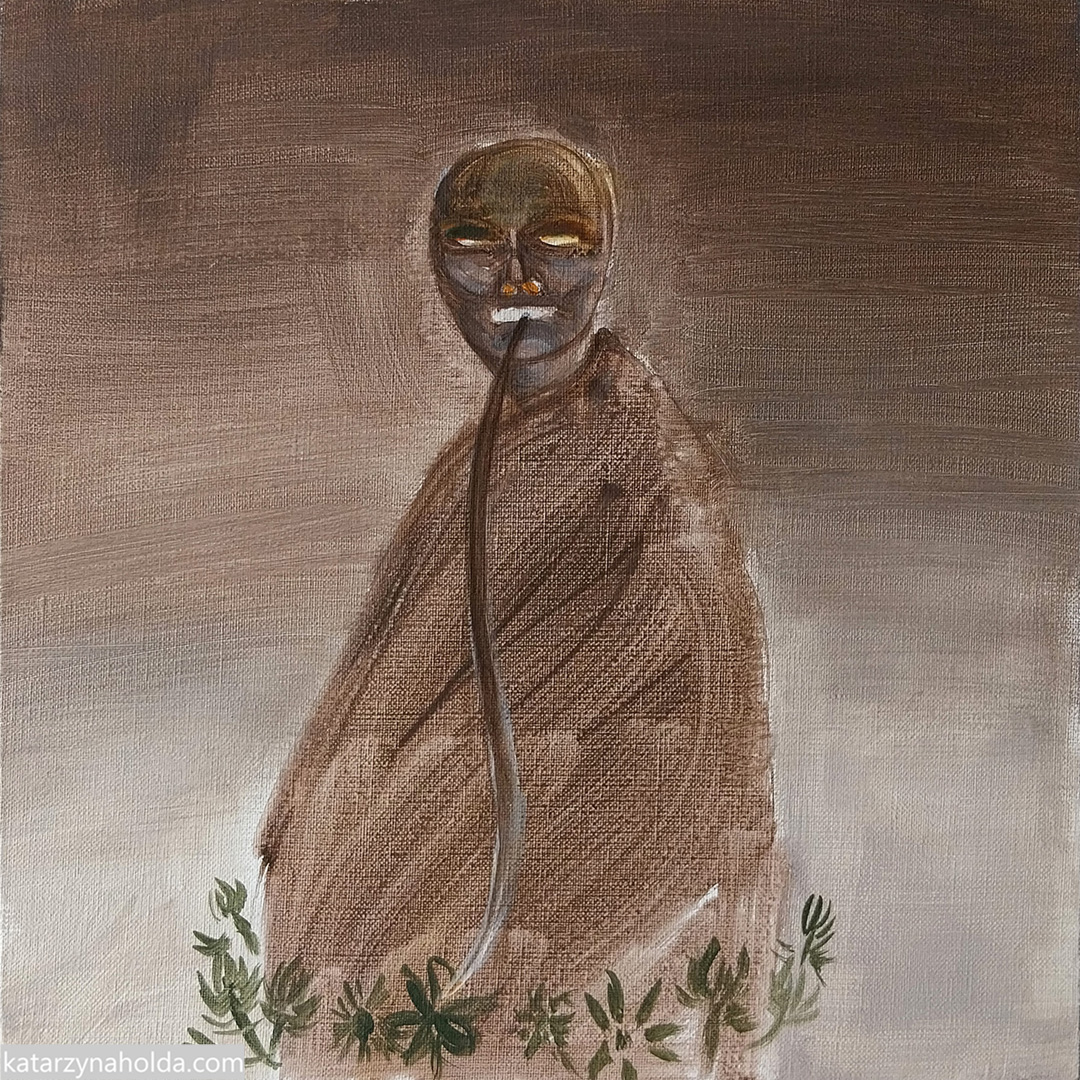
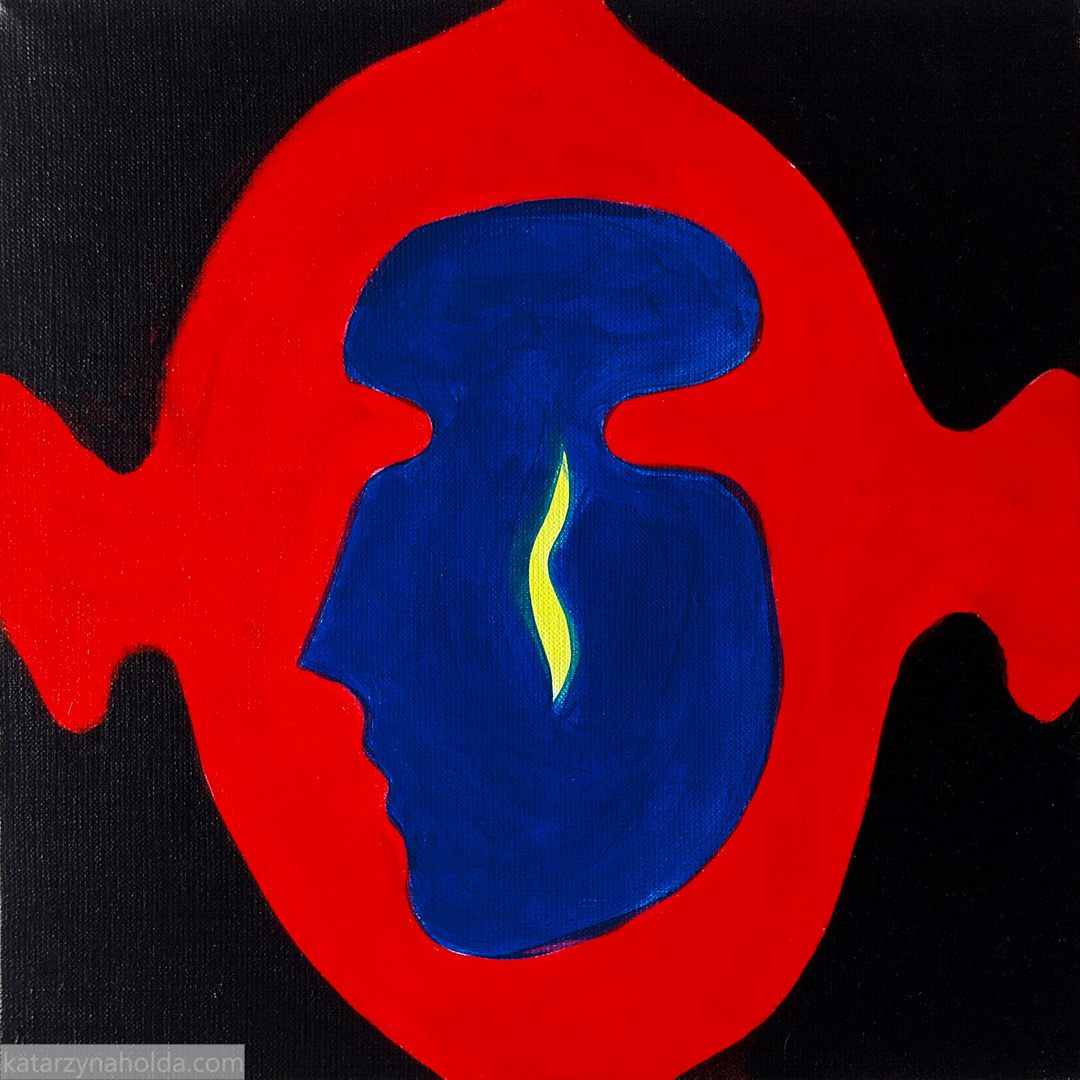
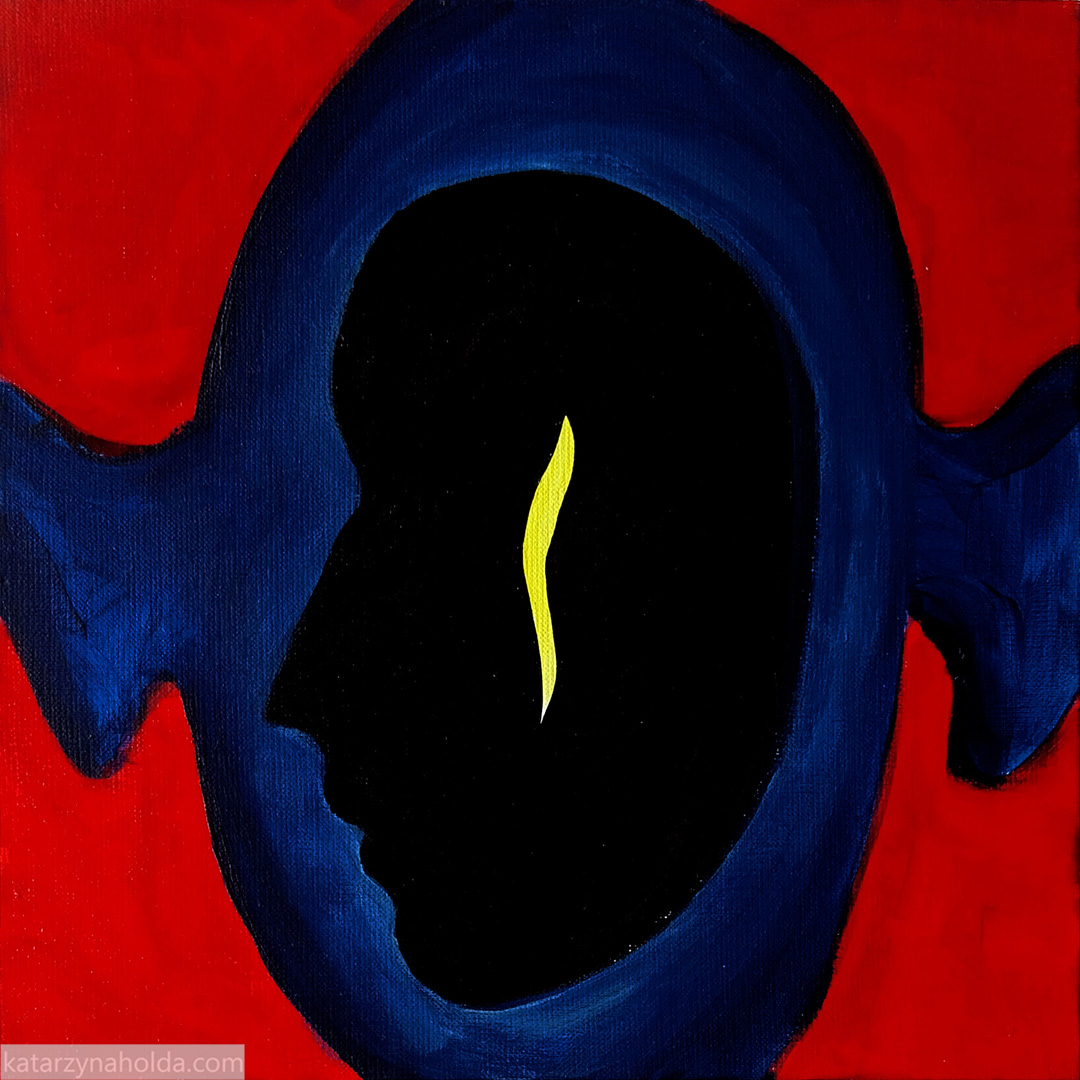
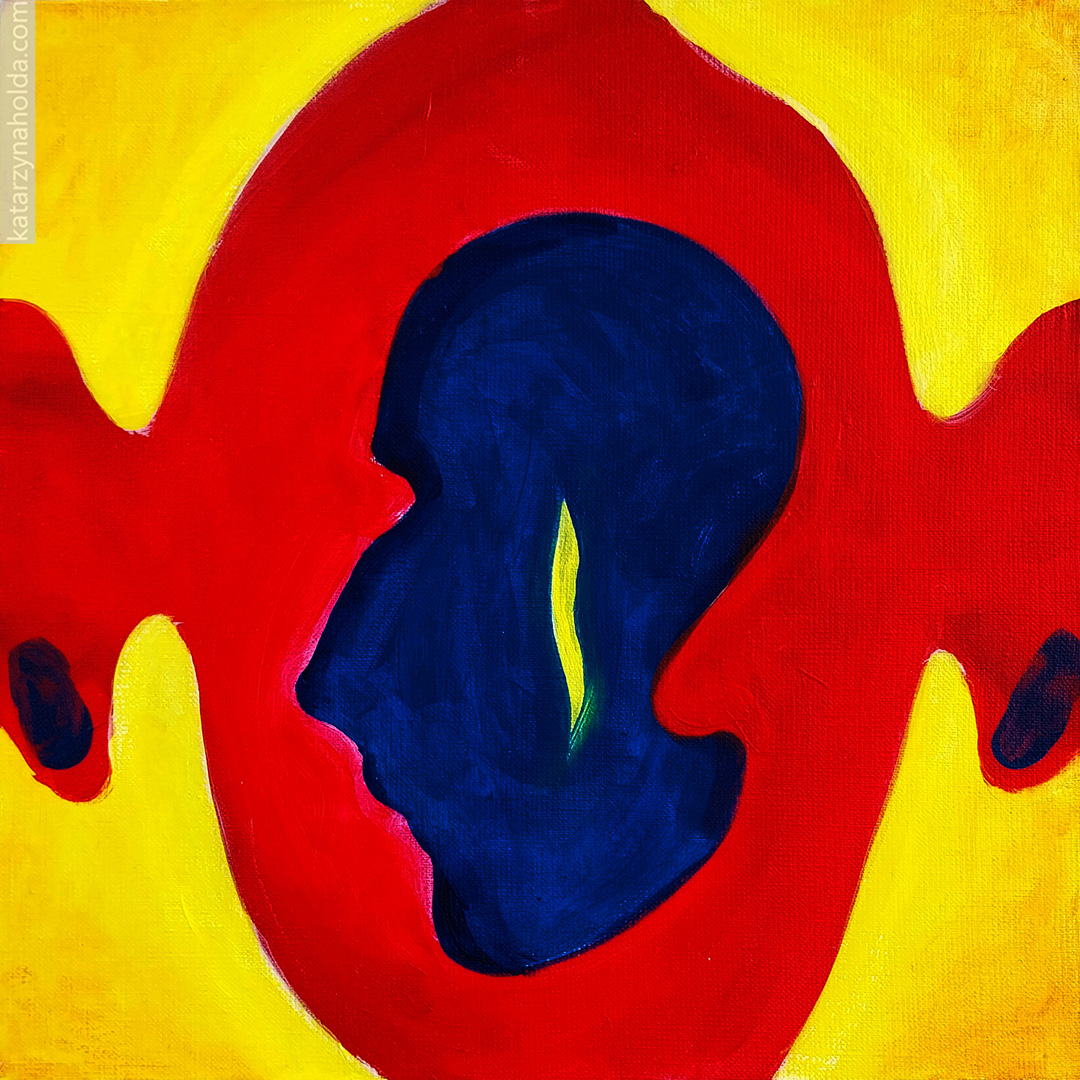
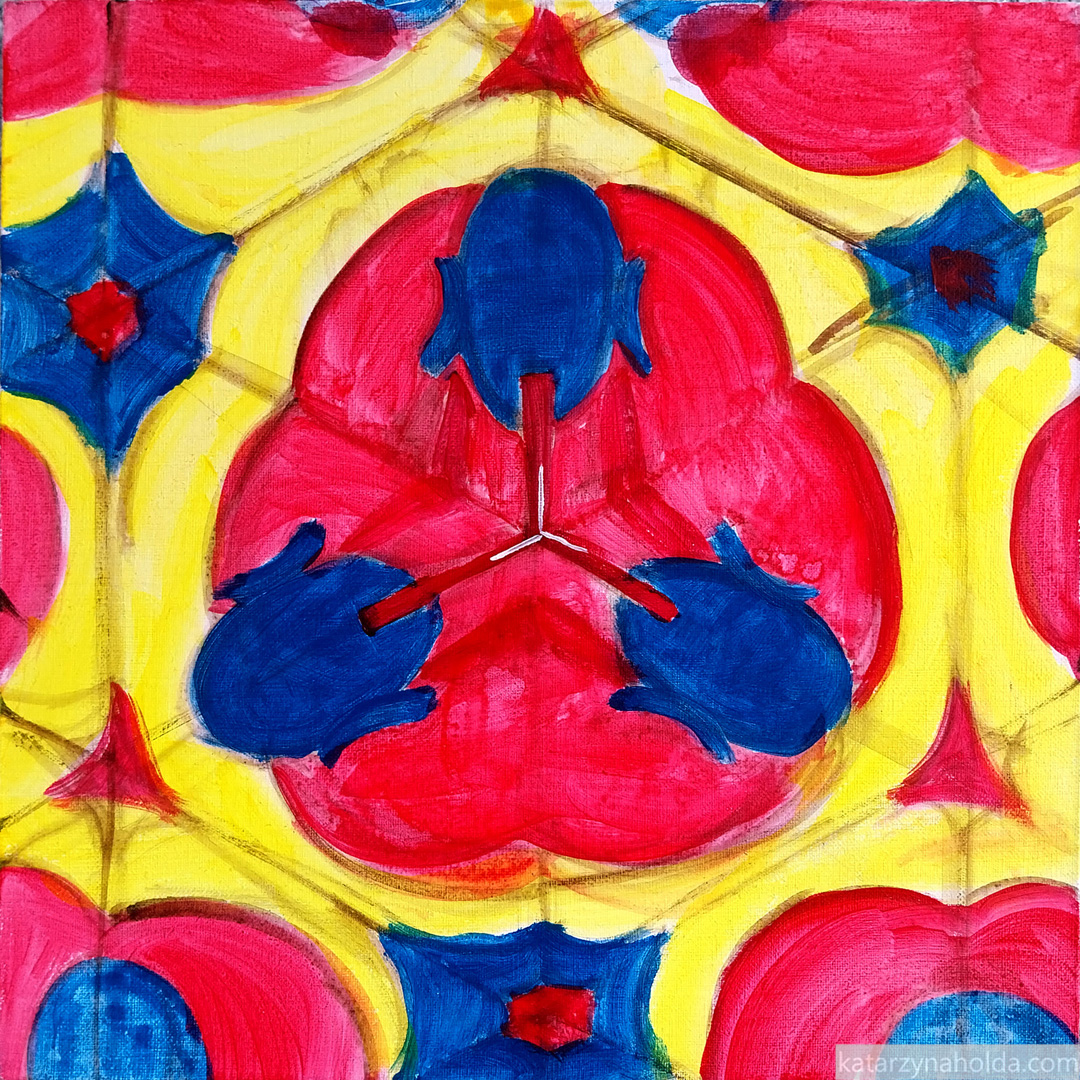
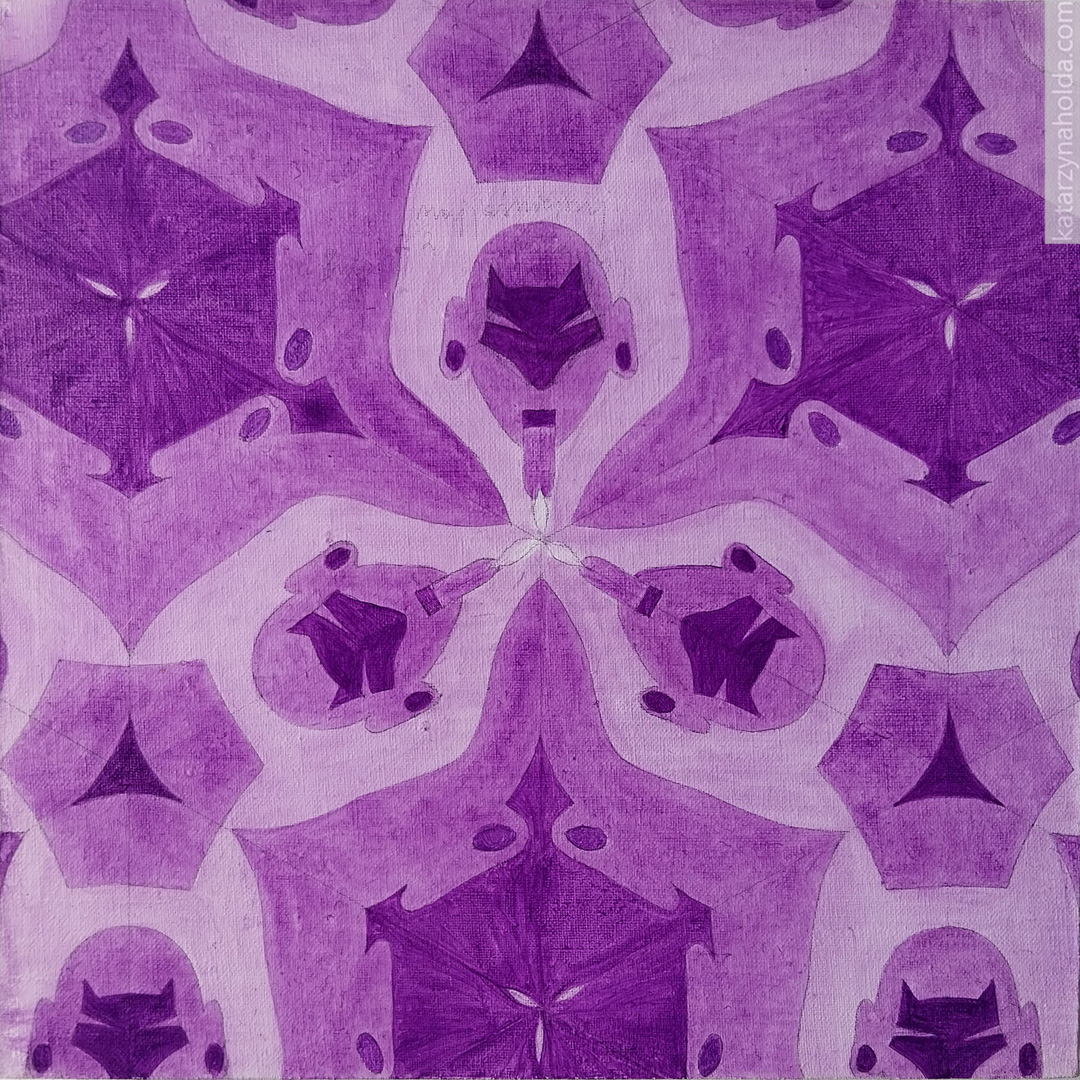
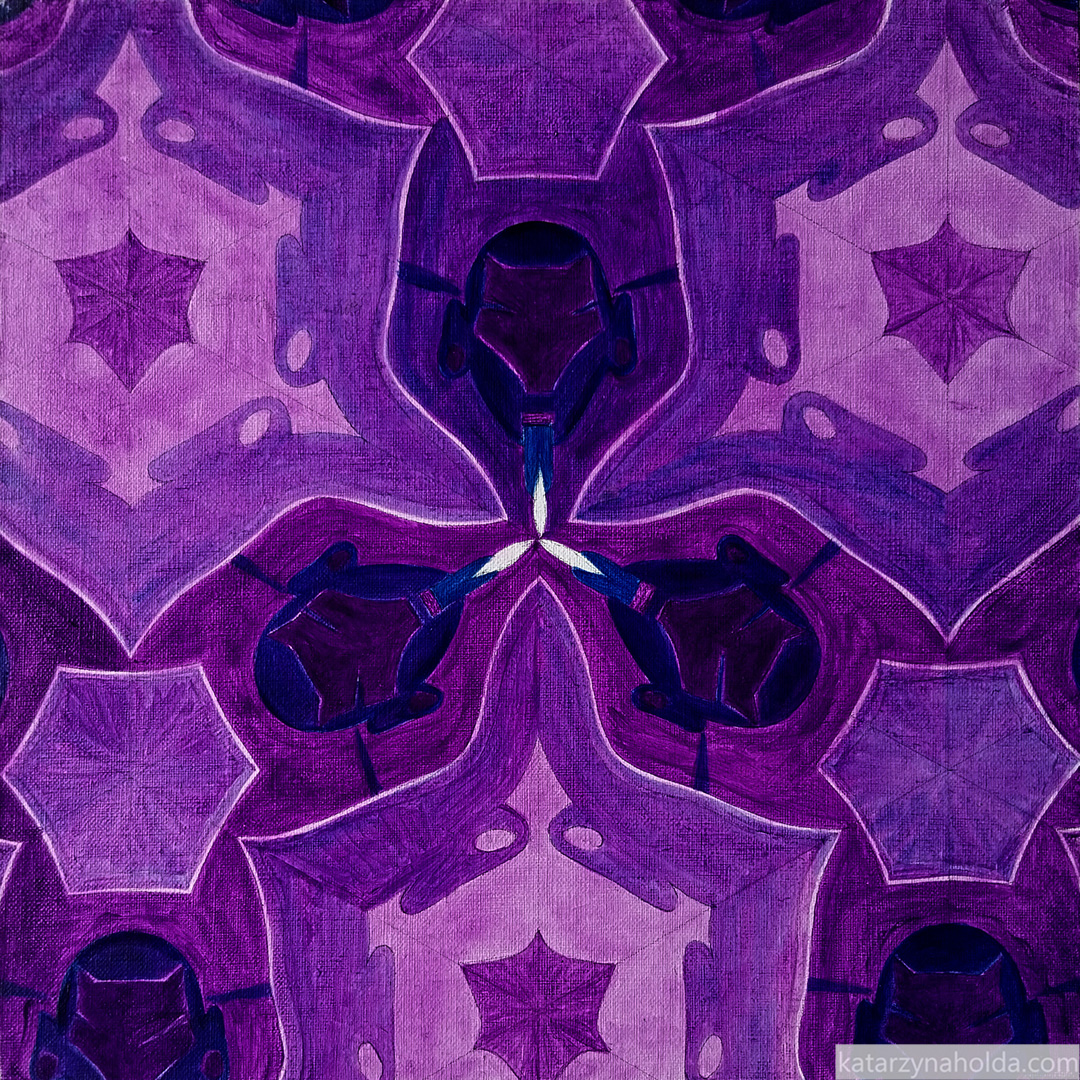
The masks in the painting Dziady (Forefathers) symbolise our souls and those of our ancestors. The flames of fire in the paintings Dziady and Noc Kupały (Kupala Night) symbolise Zoe and the soul. The kaleidoscope in Dziady is a symbol of the rebirth of life each time from the same matter, which, dying and being reborn each time, creates a different form.
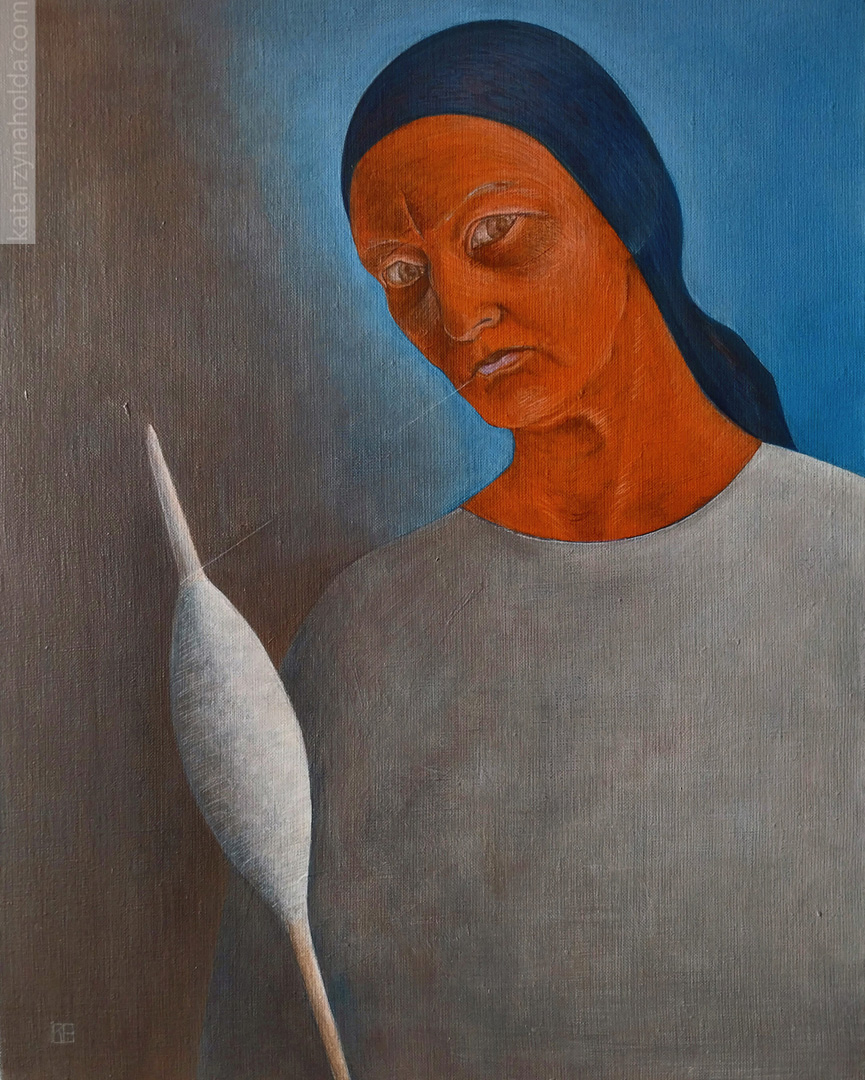
The painting Prządka (Spinner) refers to the goddesses of life, death and fate. These goddesses appear in the form of three spinners, for example in Greek mythology. The spinner goddess – or goddess of fate – also appears in the Sleeping Beauty tale – as an old woman with a spindle. The spinning spindle here is a symbol of the wheel of life.
PAINTING SKETCHES
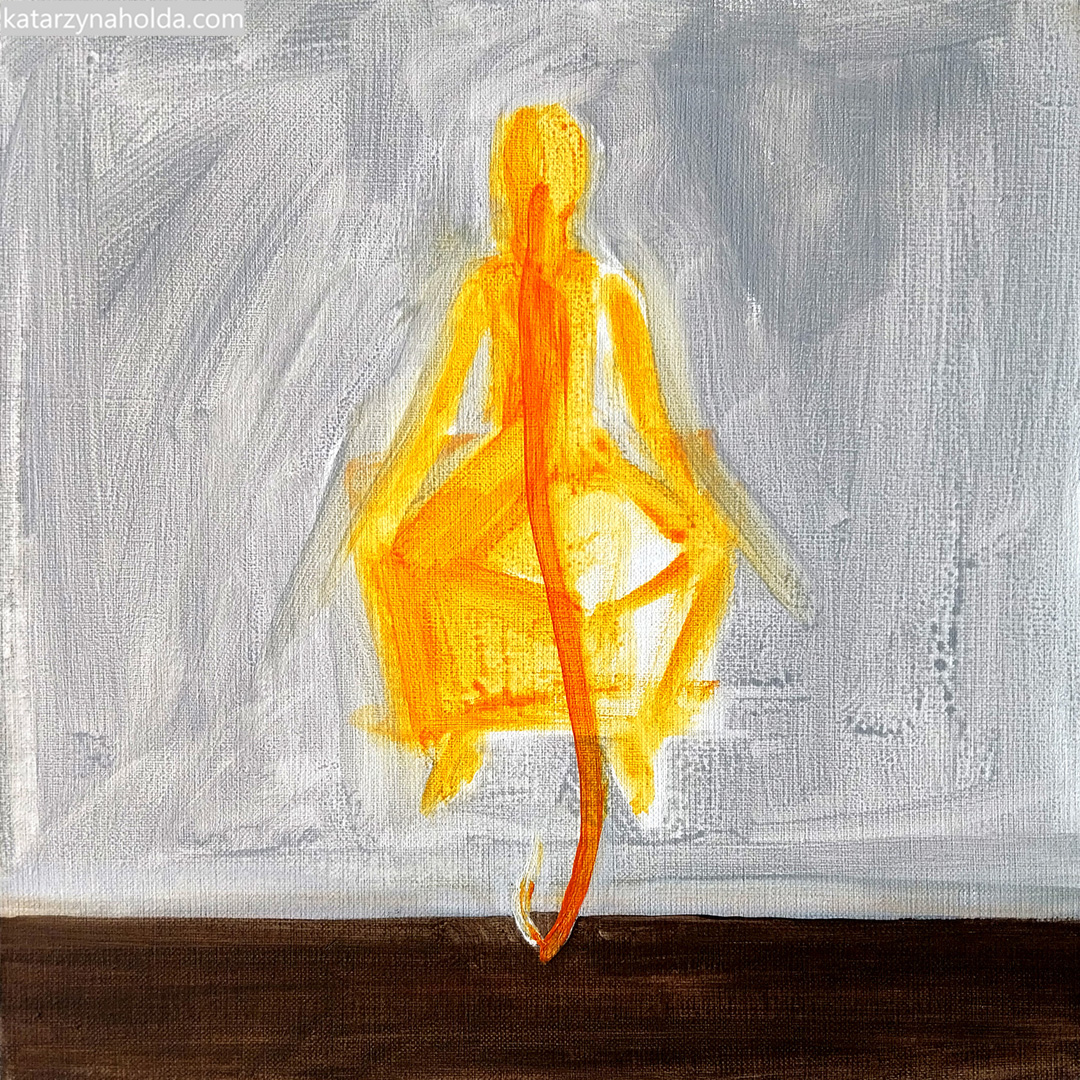
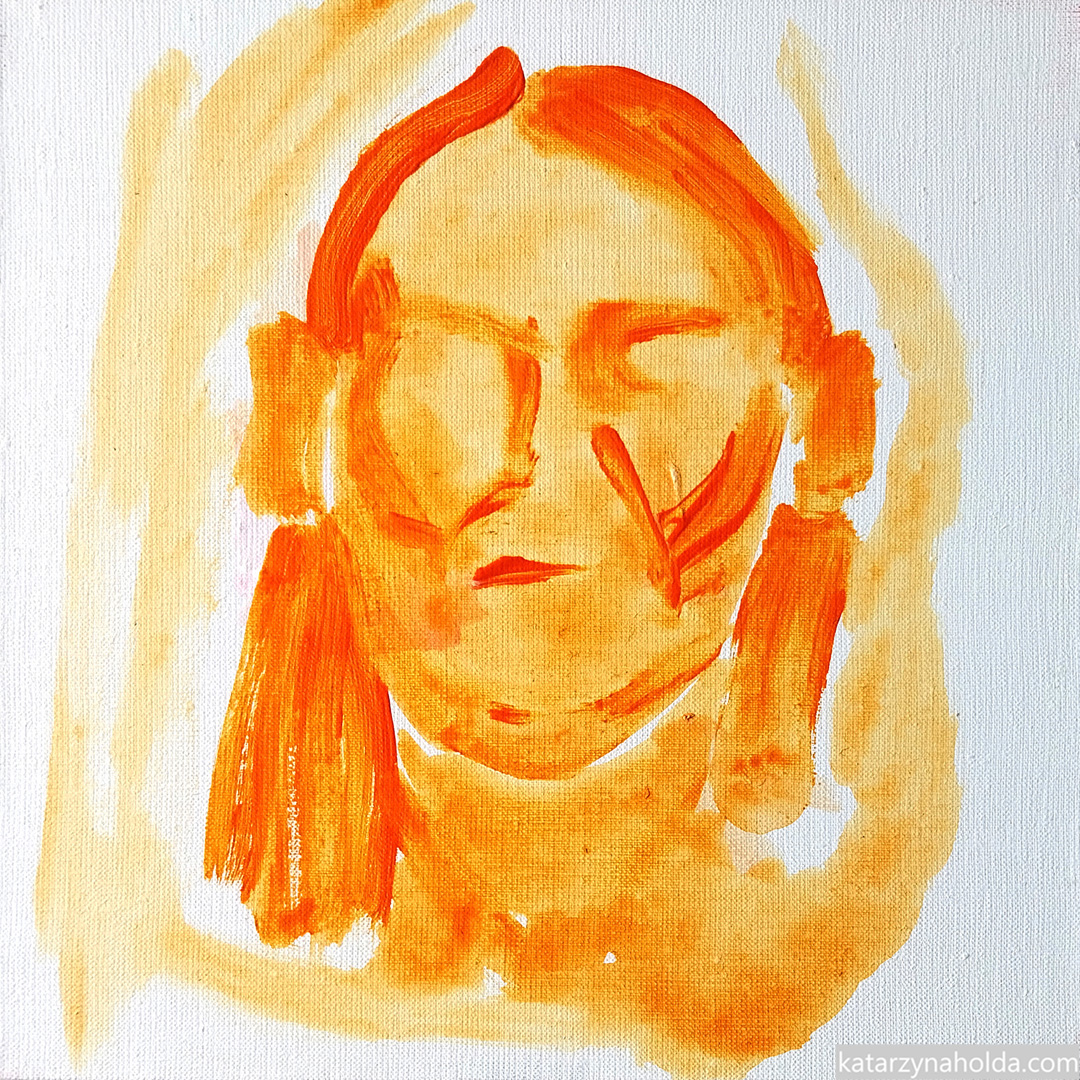
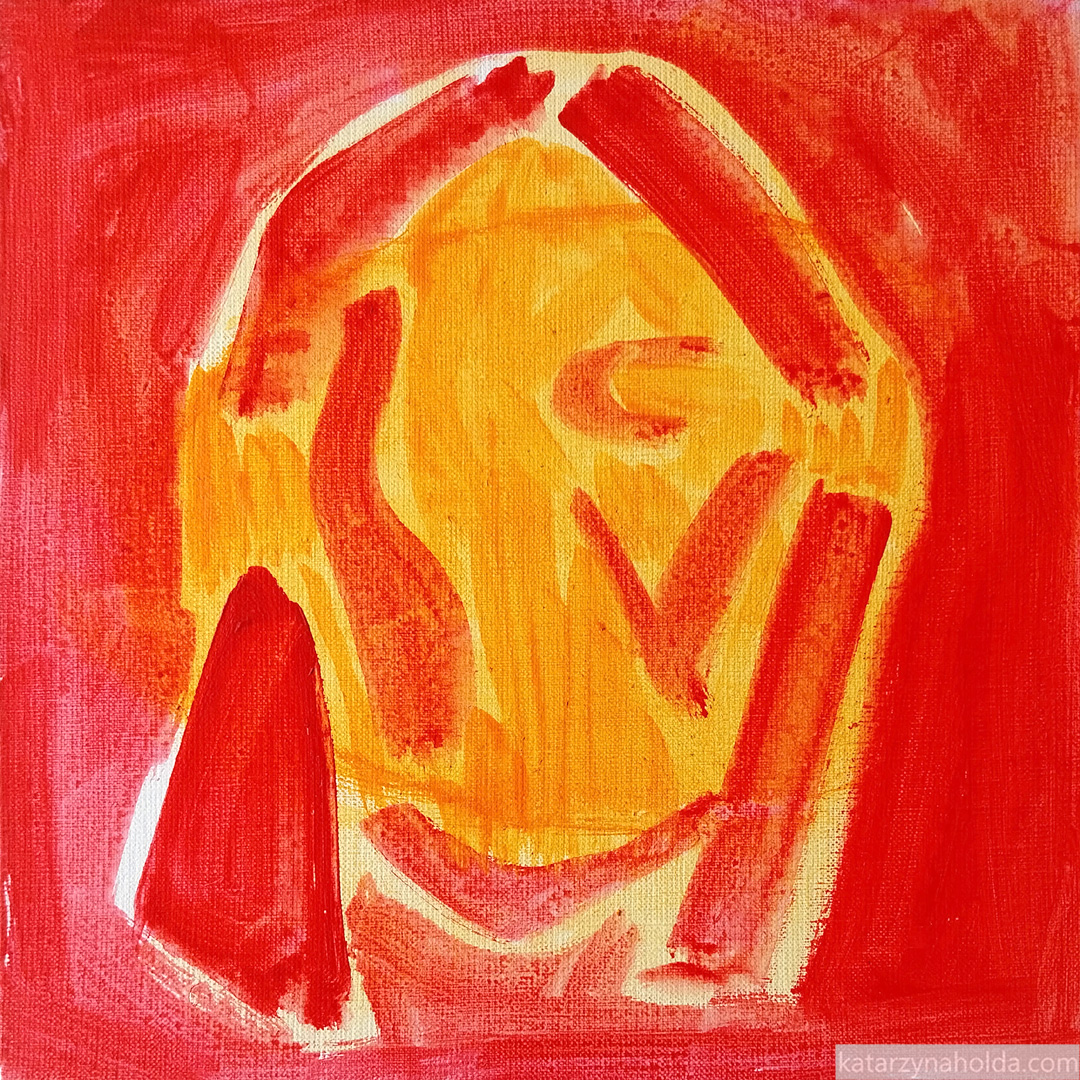
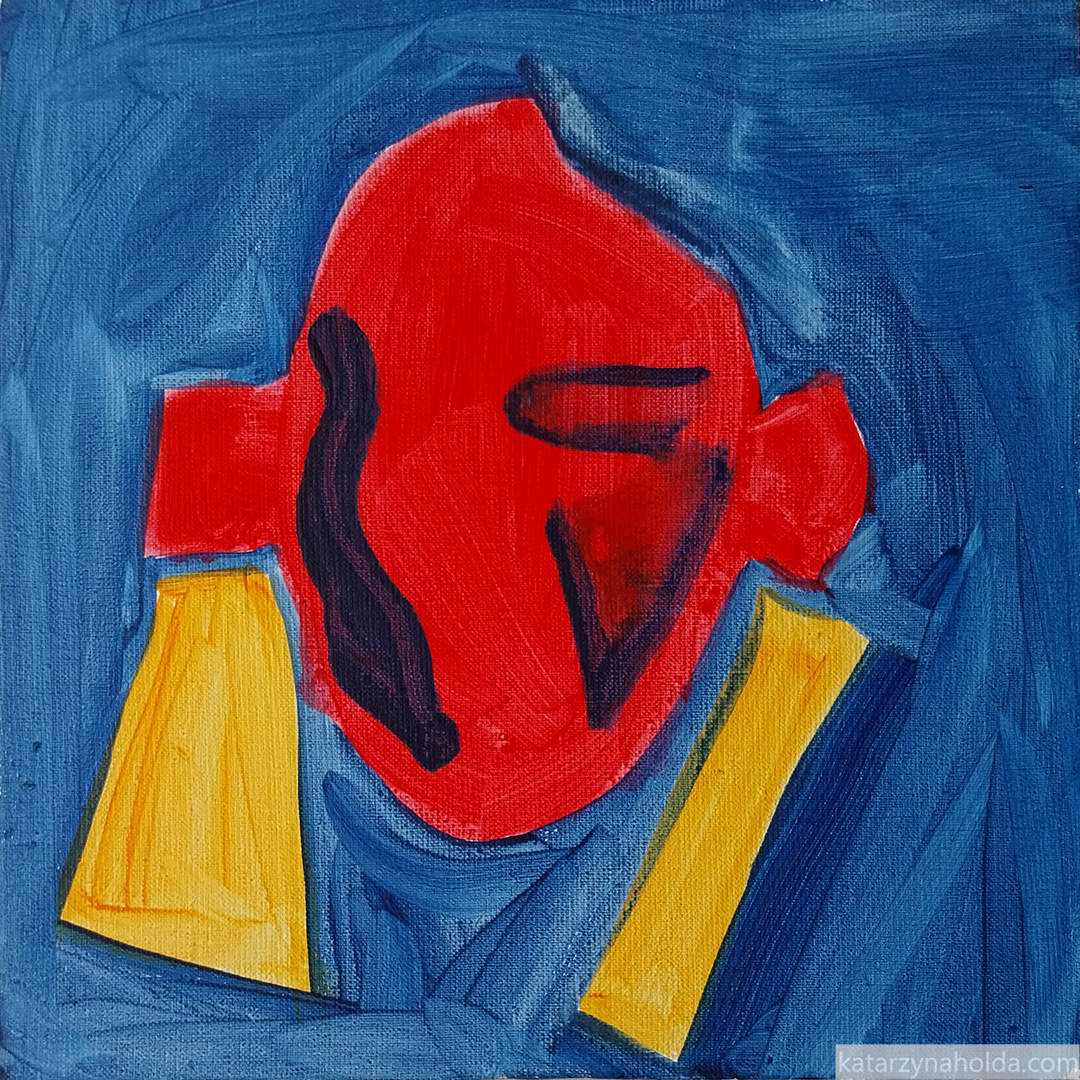
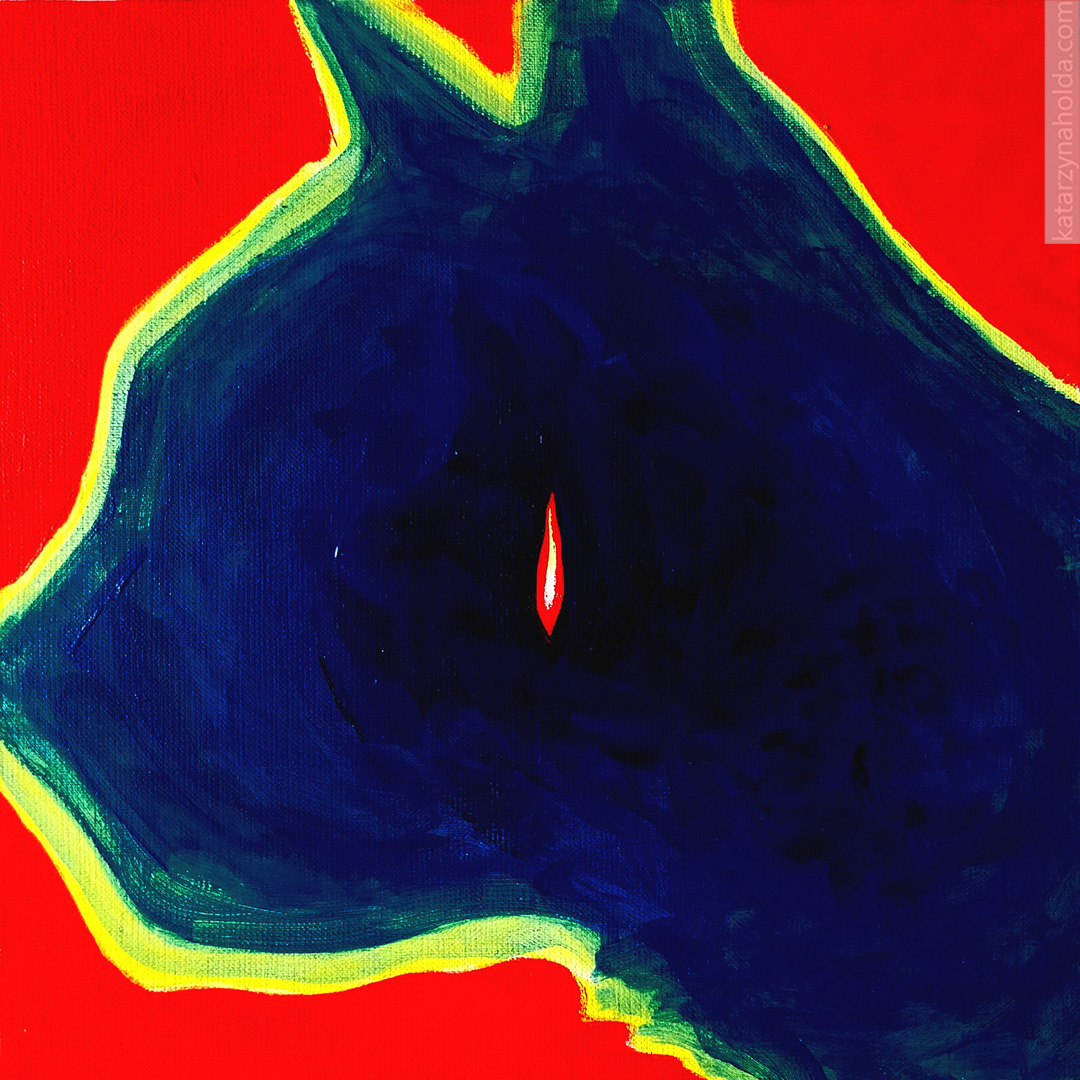
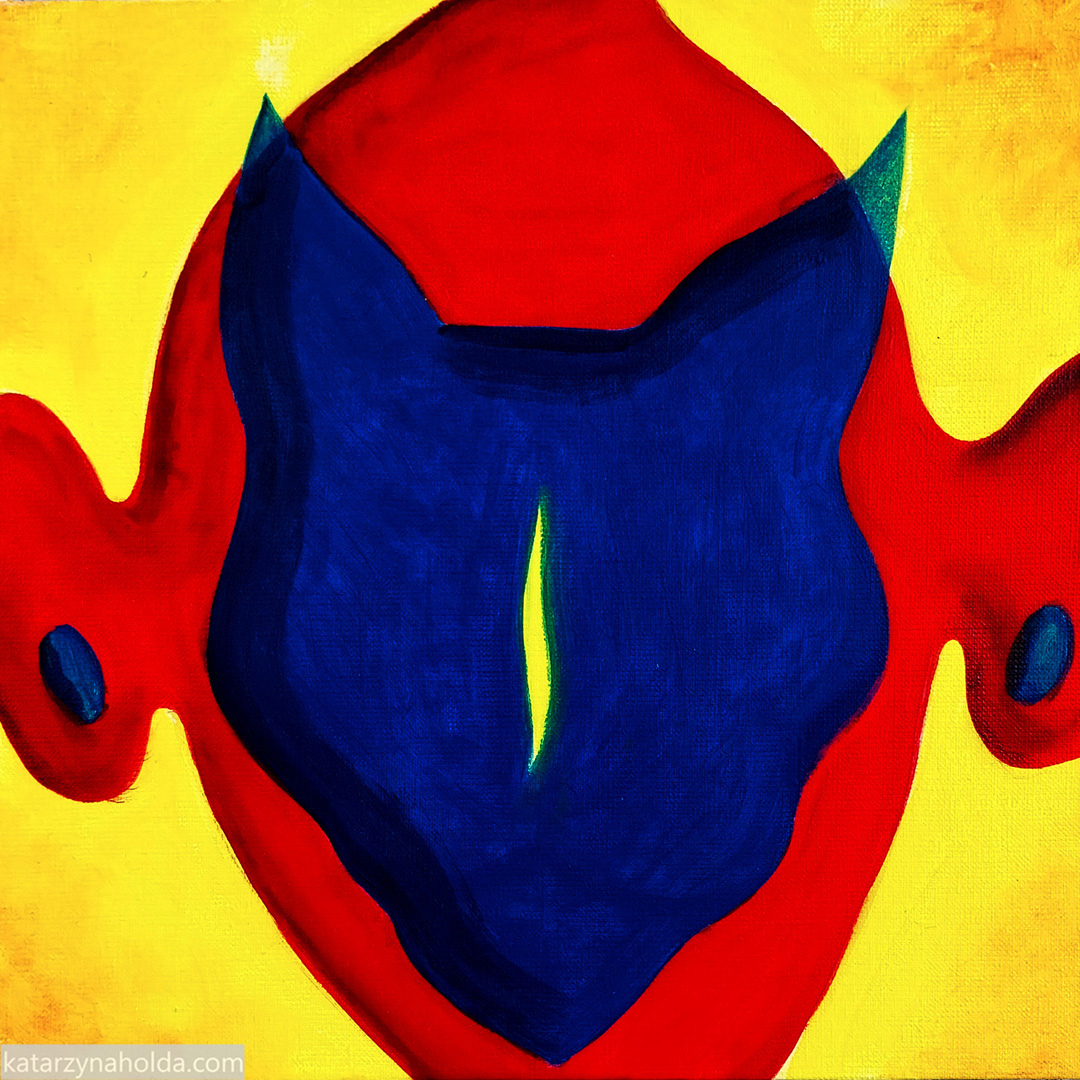
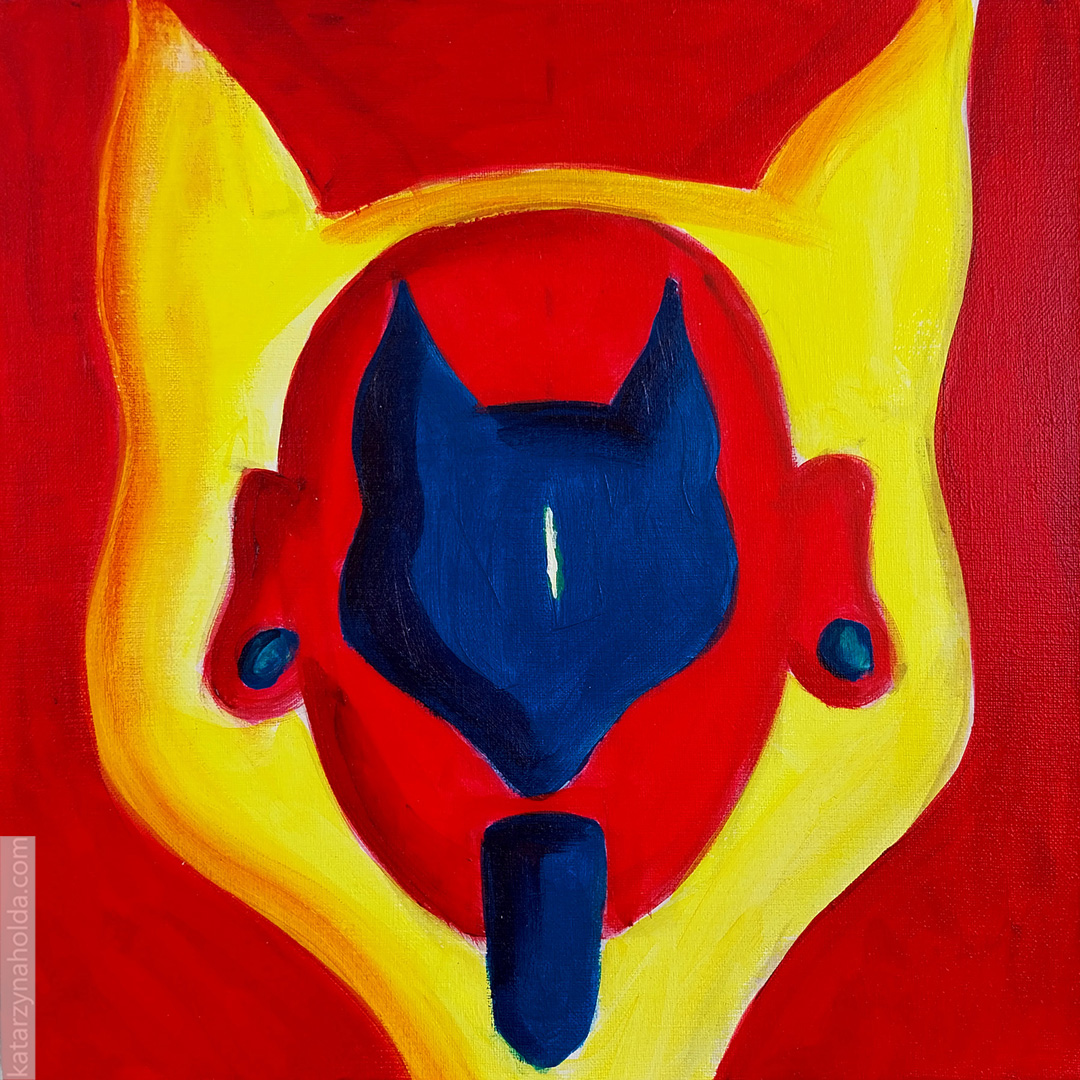
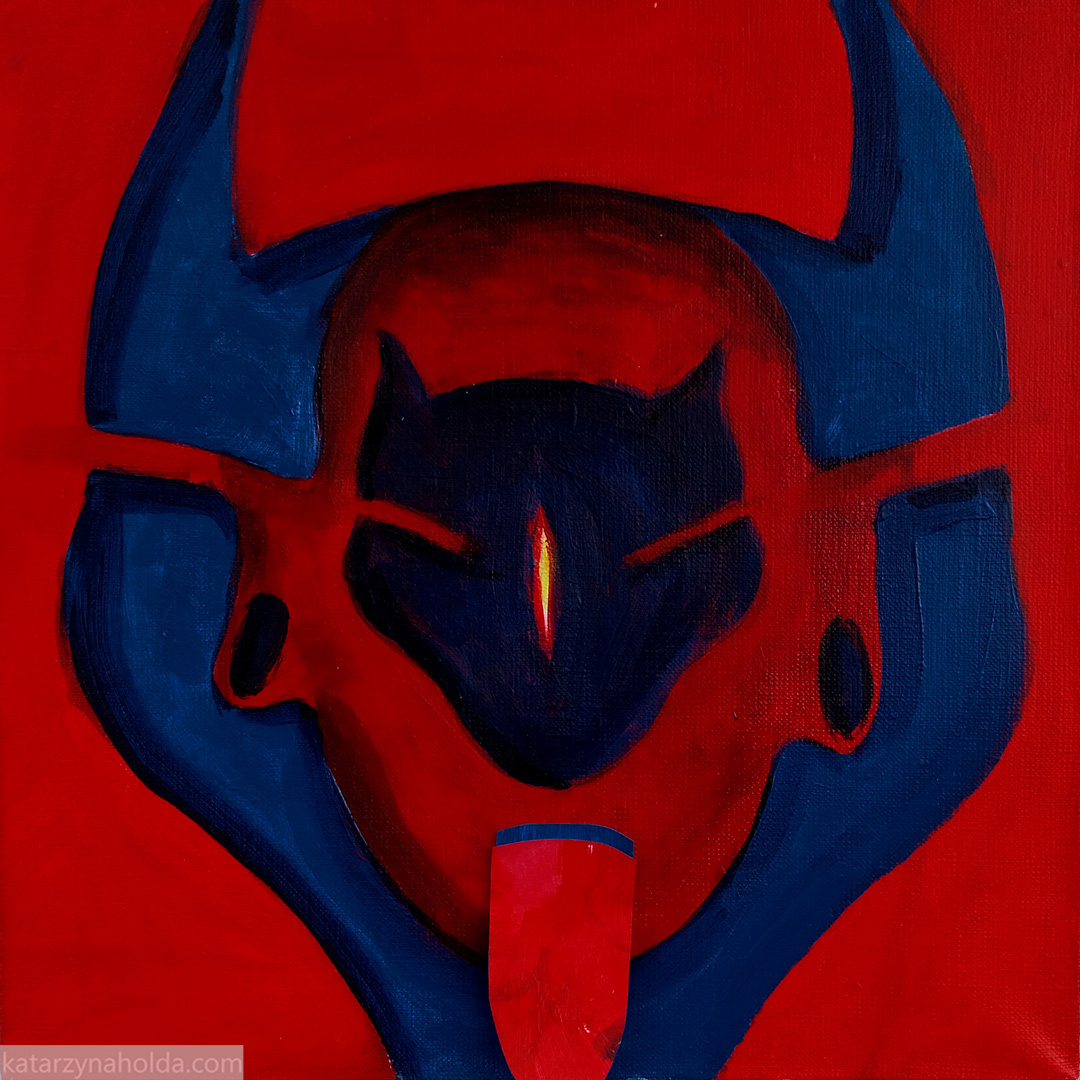
The Bios and Zoe series includes concept sketches that I created while coming up with the paintings Dziady and Noc Kupały. These sketches show the creative process, the method of arriving at solutions.
OBJECTS - MOTANKAS IN SCENOGRAPHIES
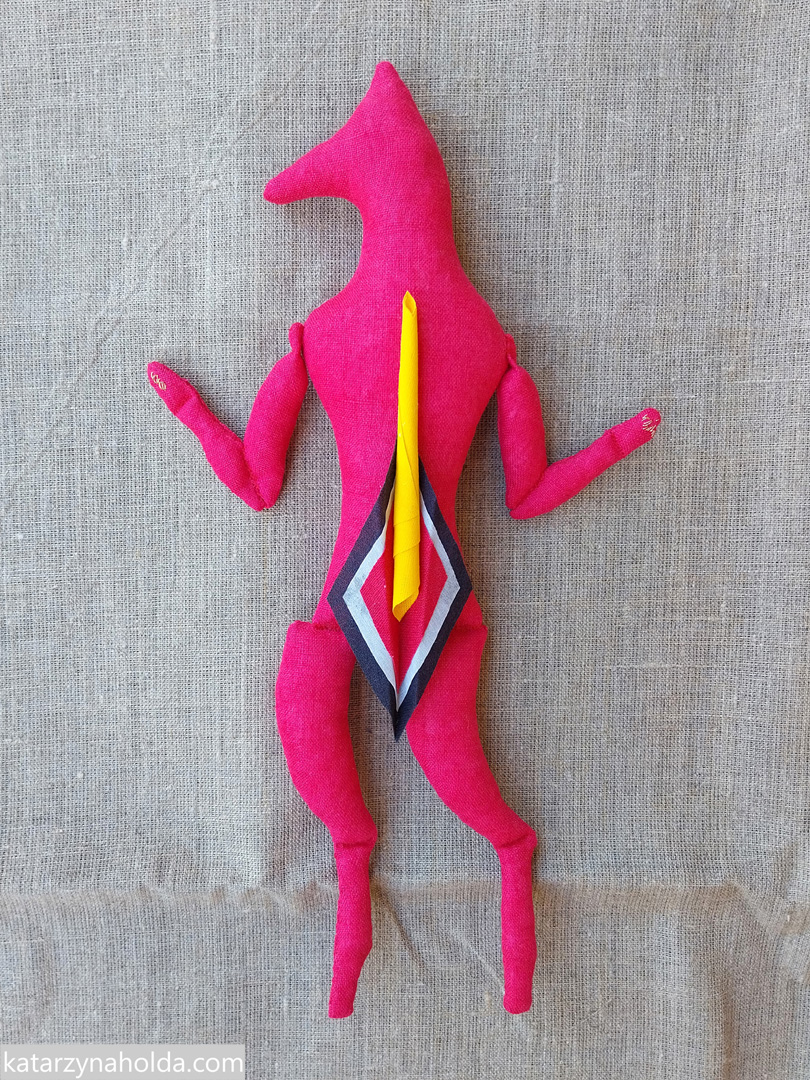
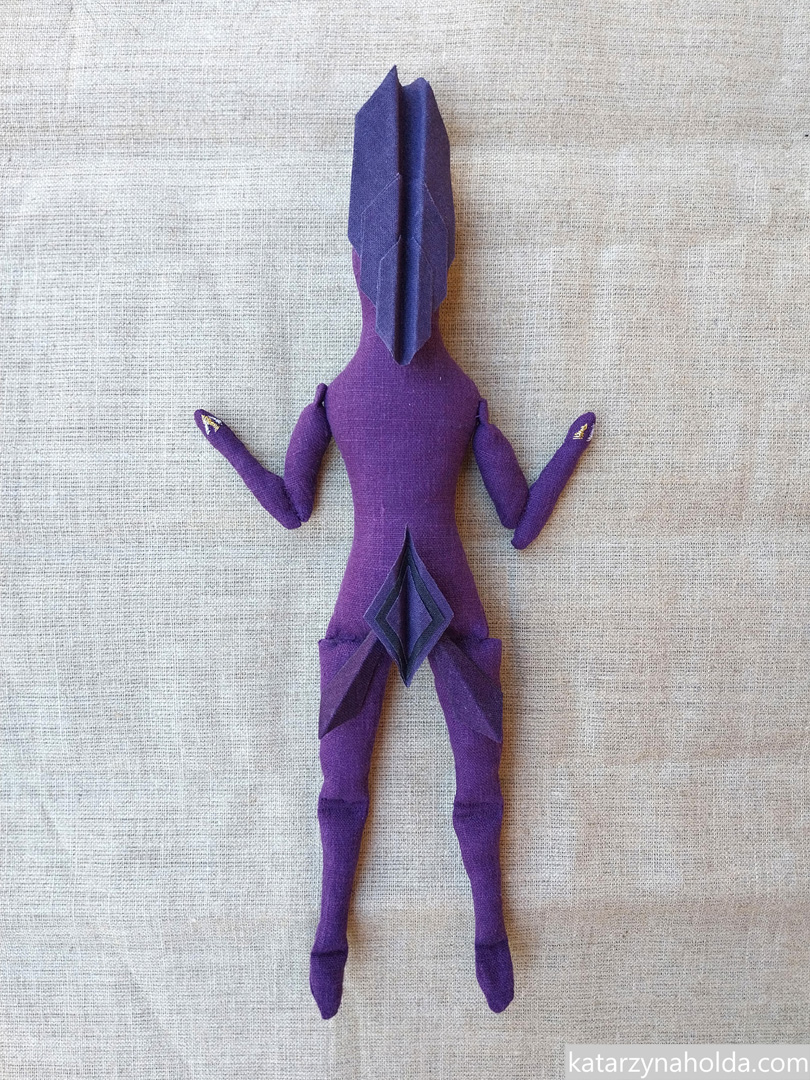
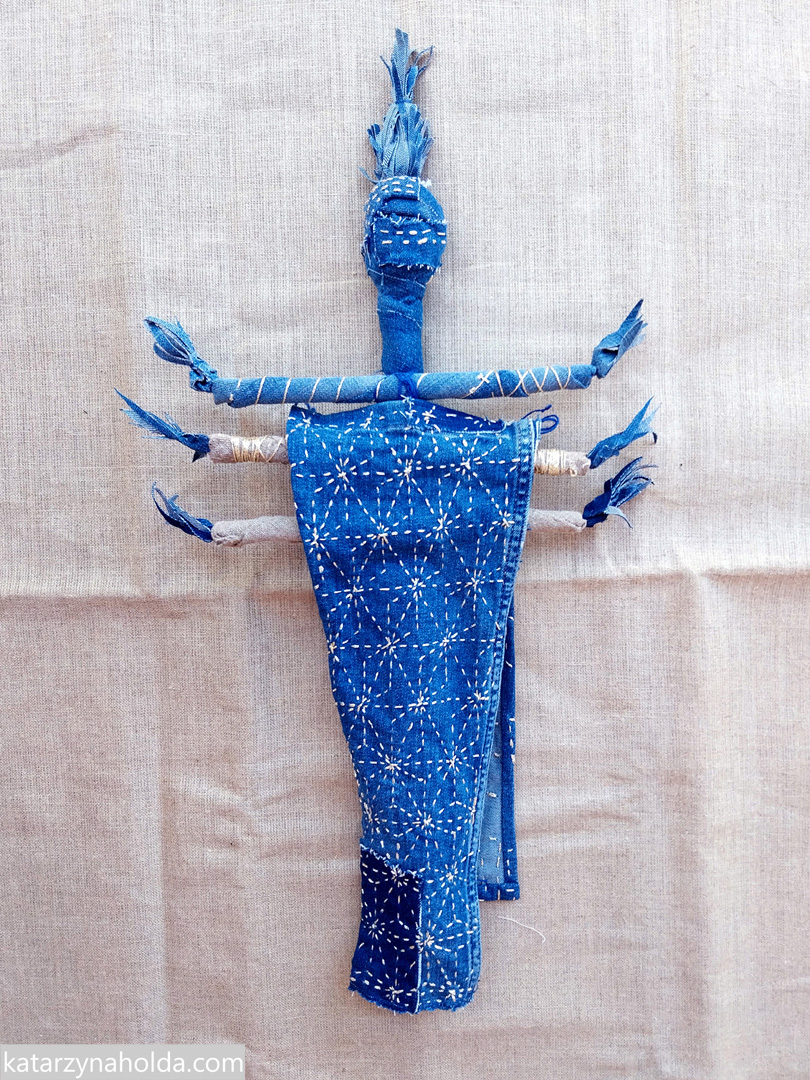
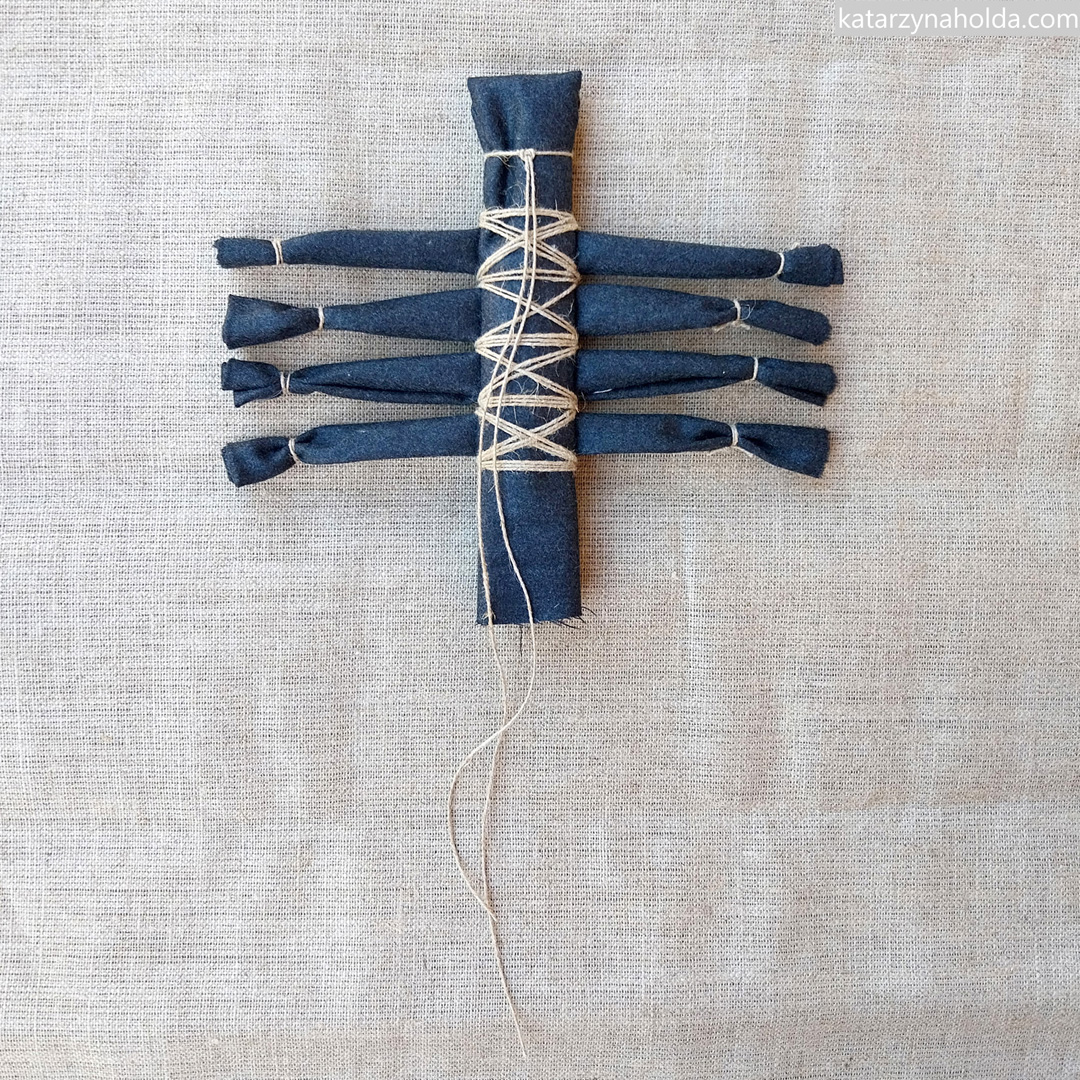
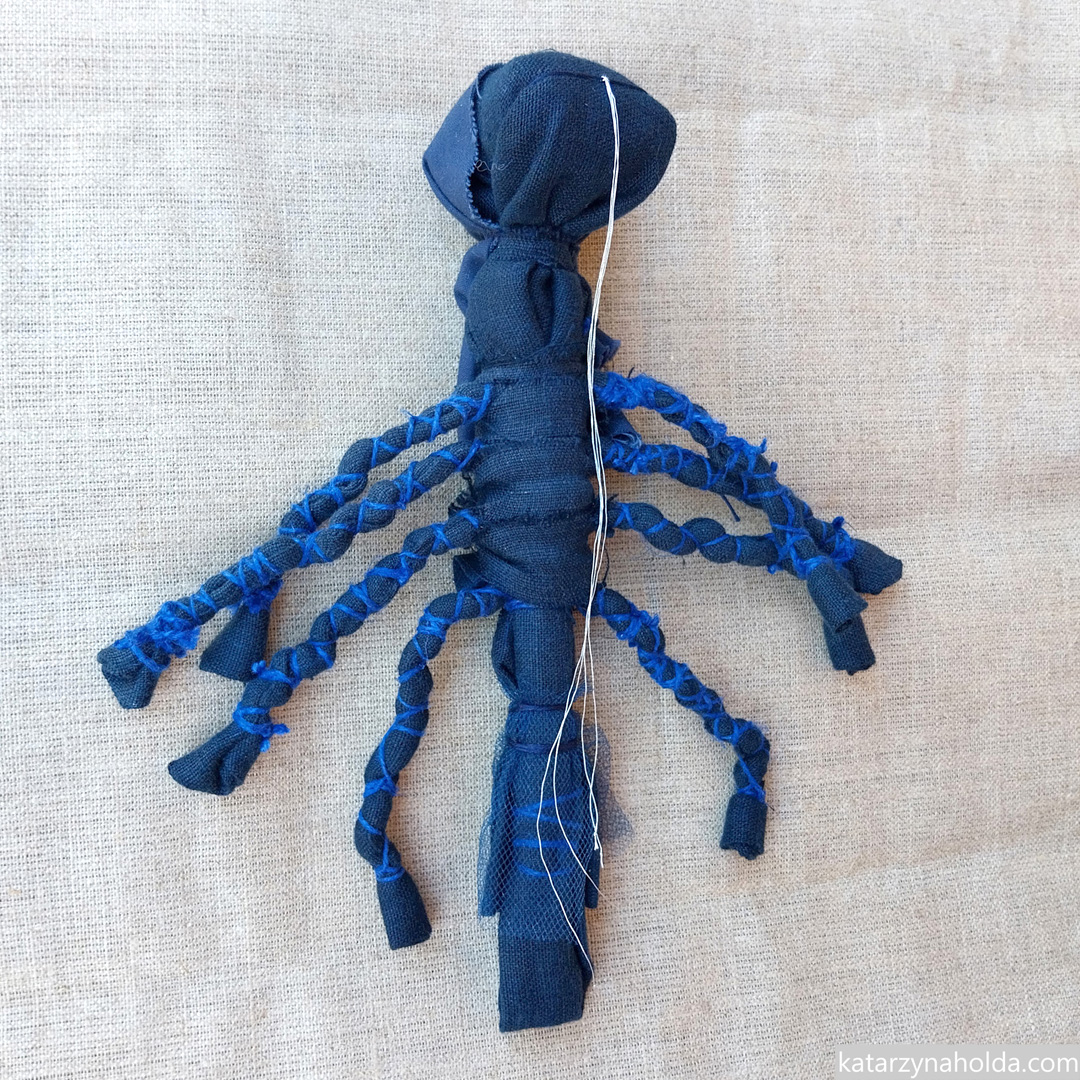
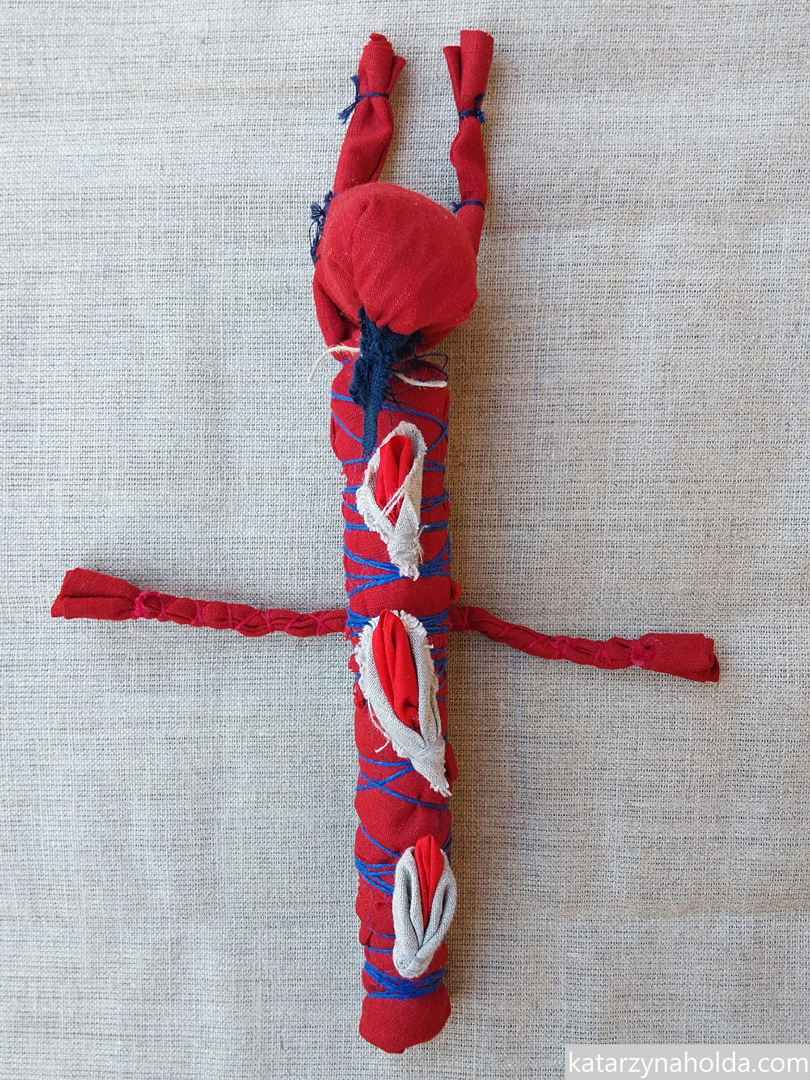
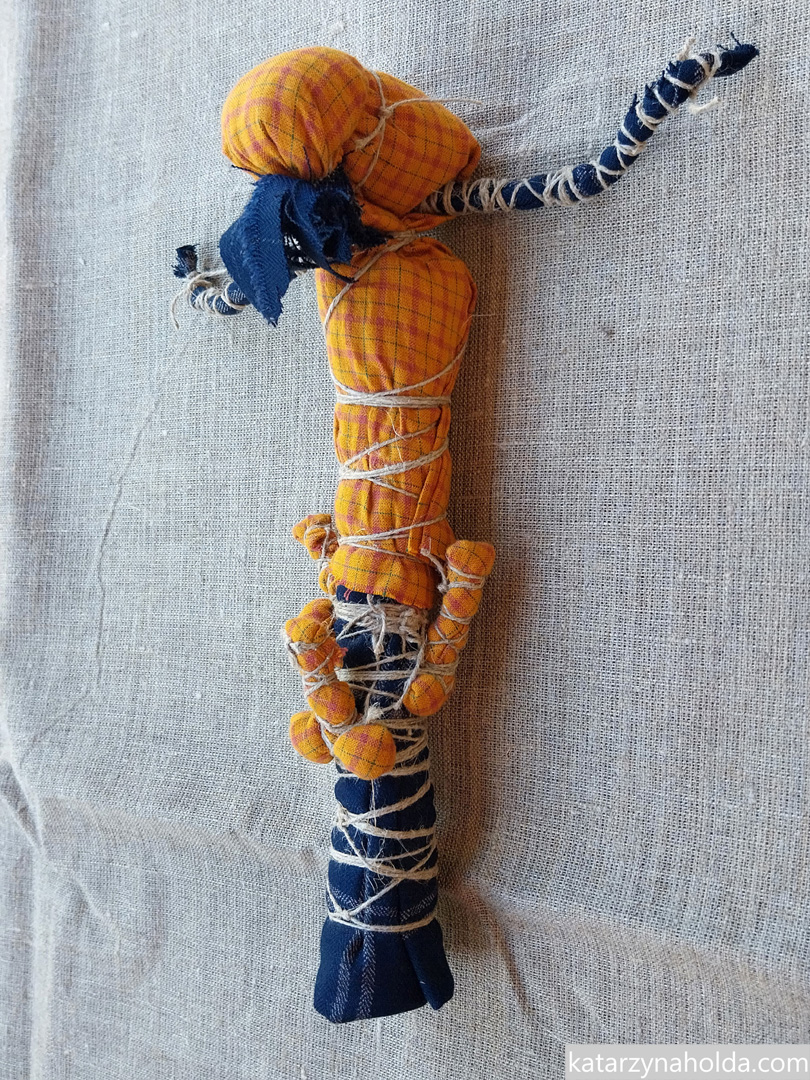
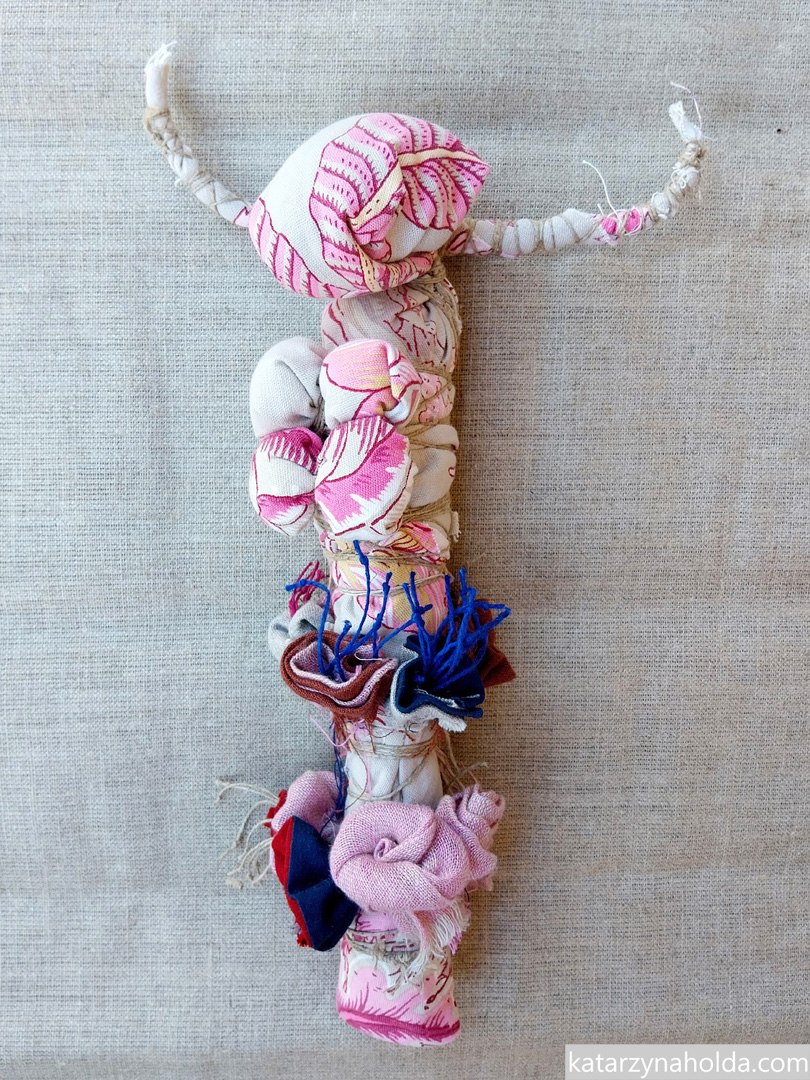
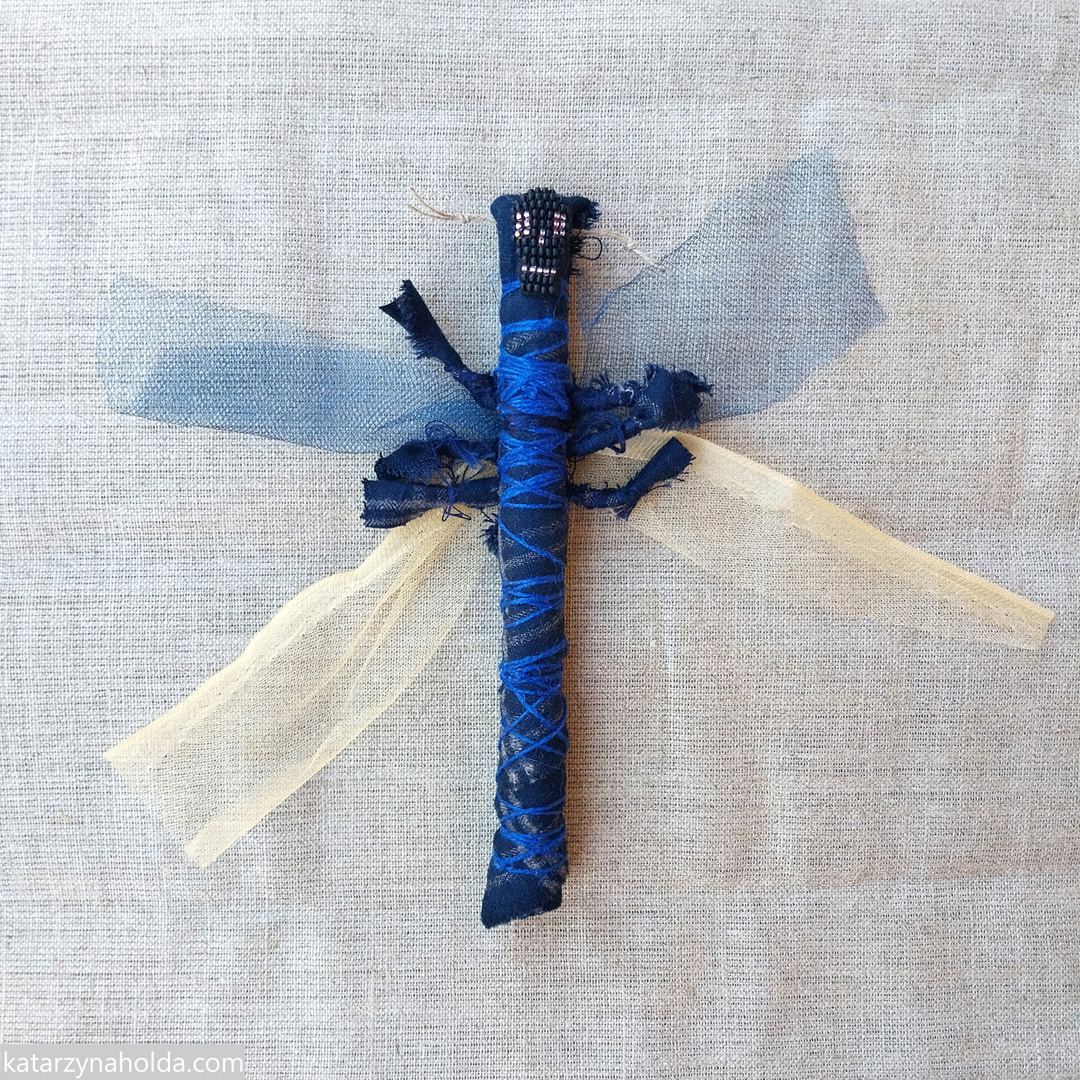
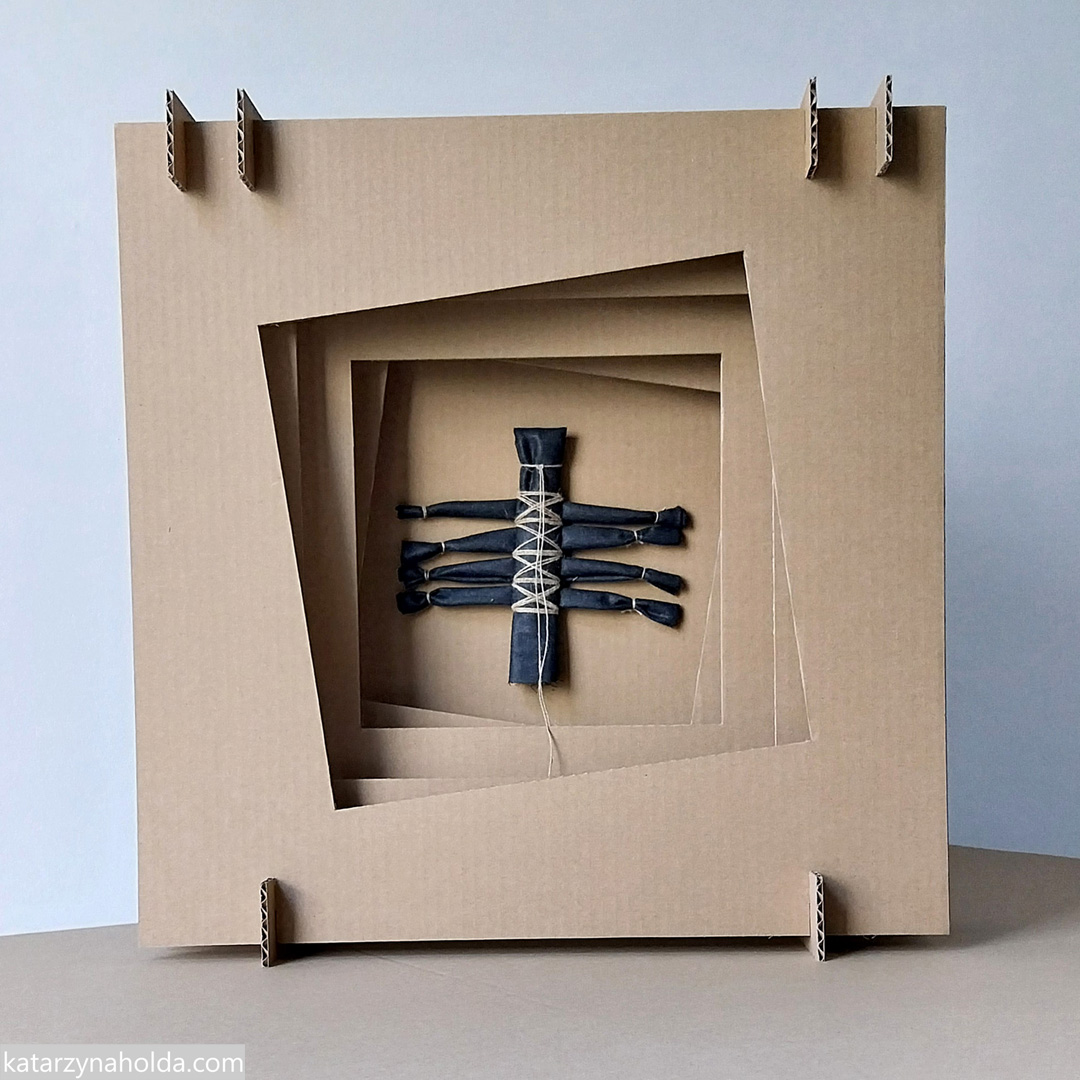
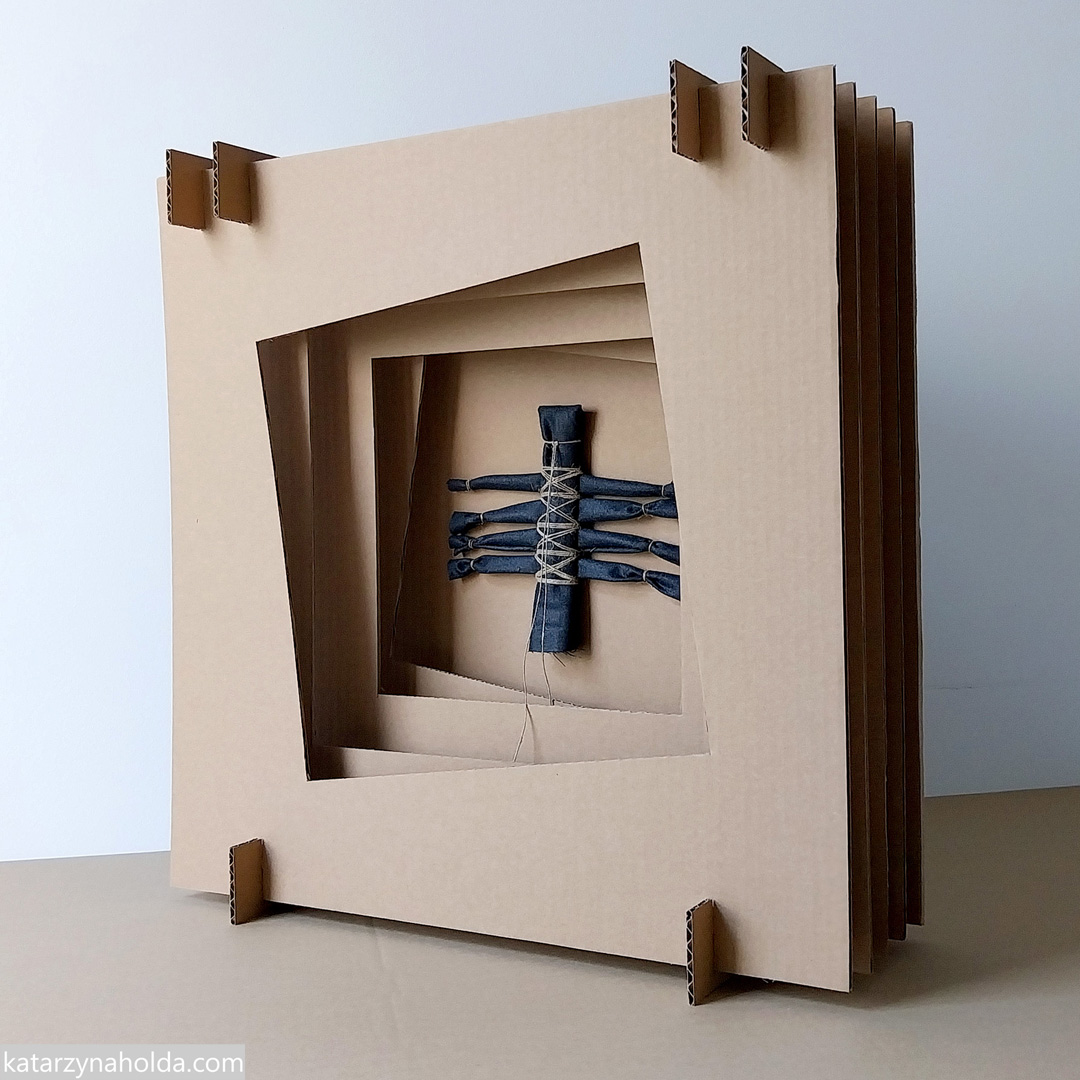
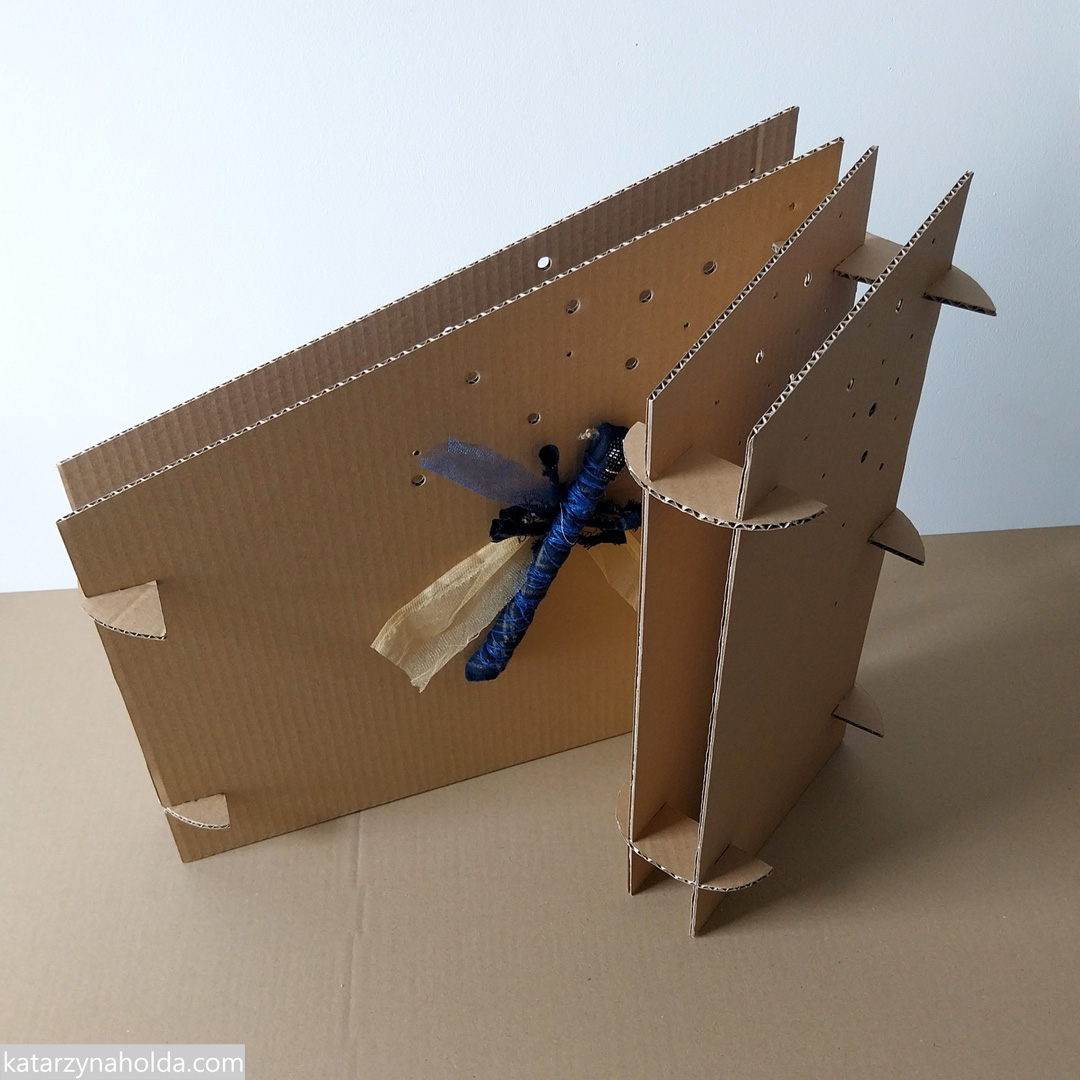
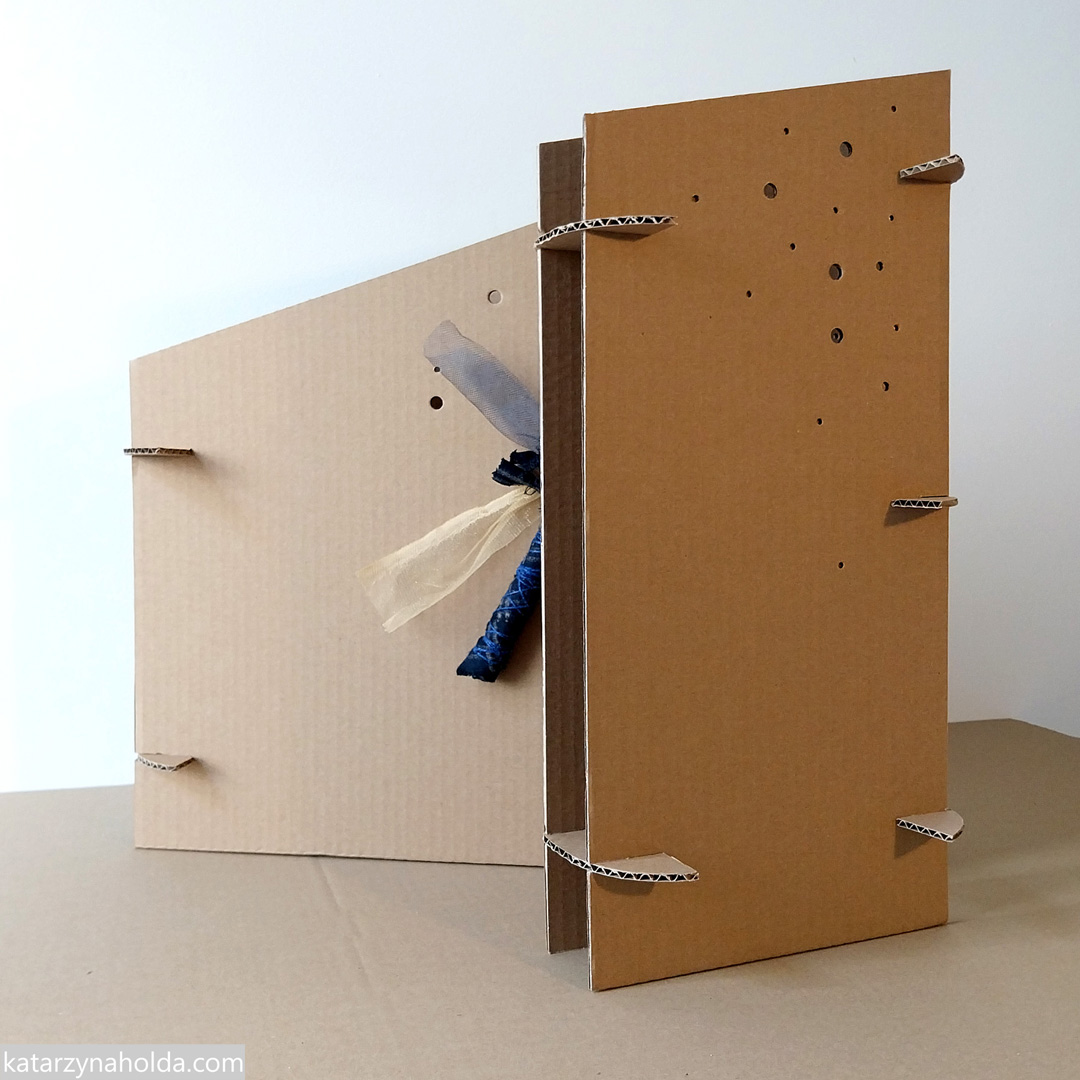
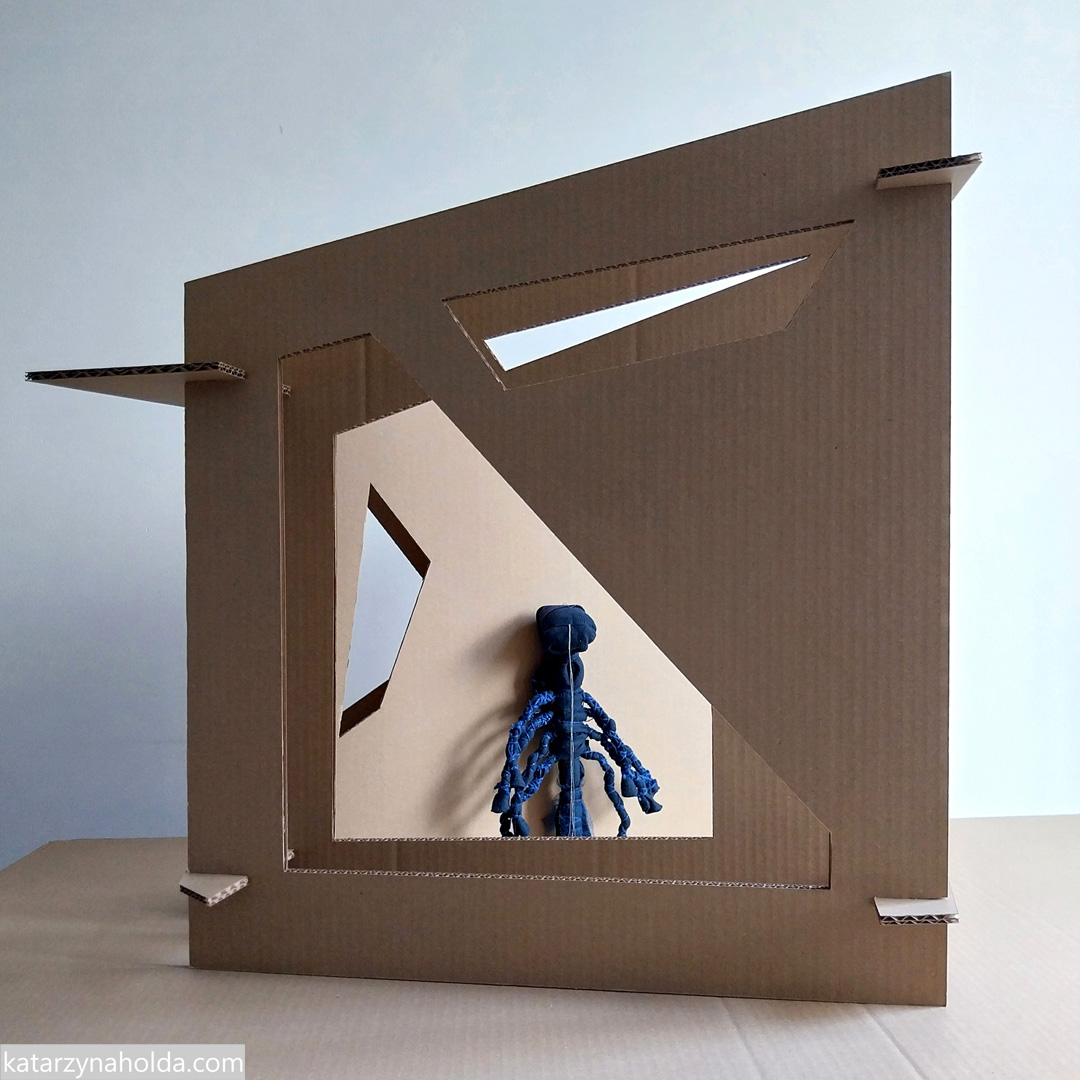
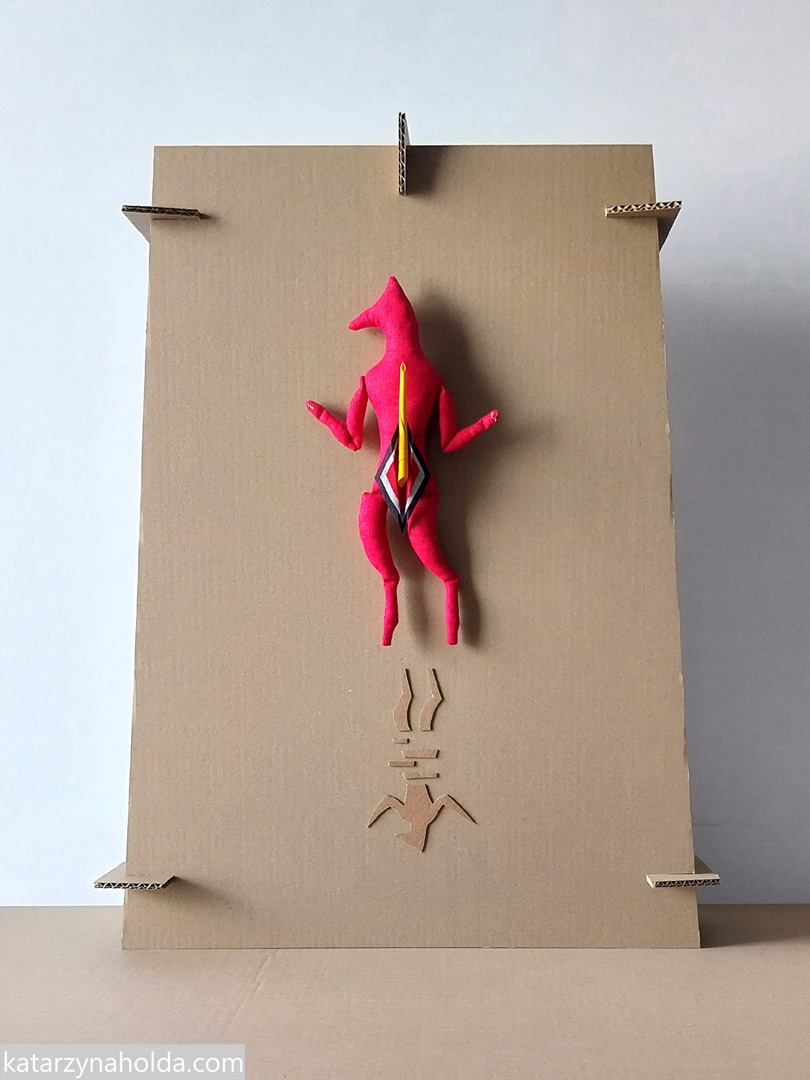
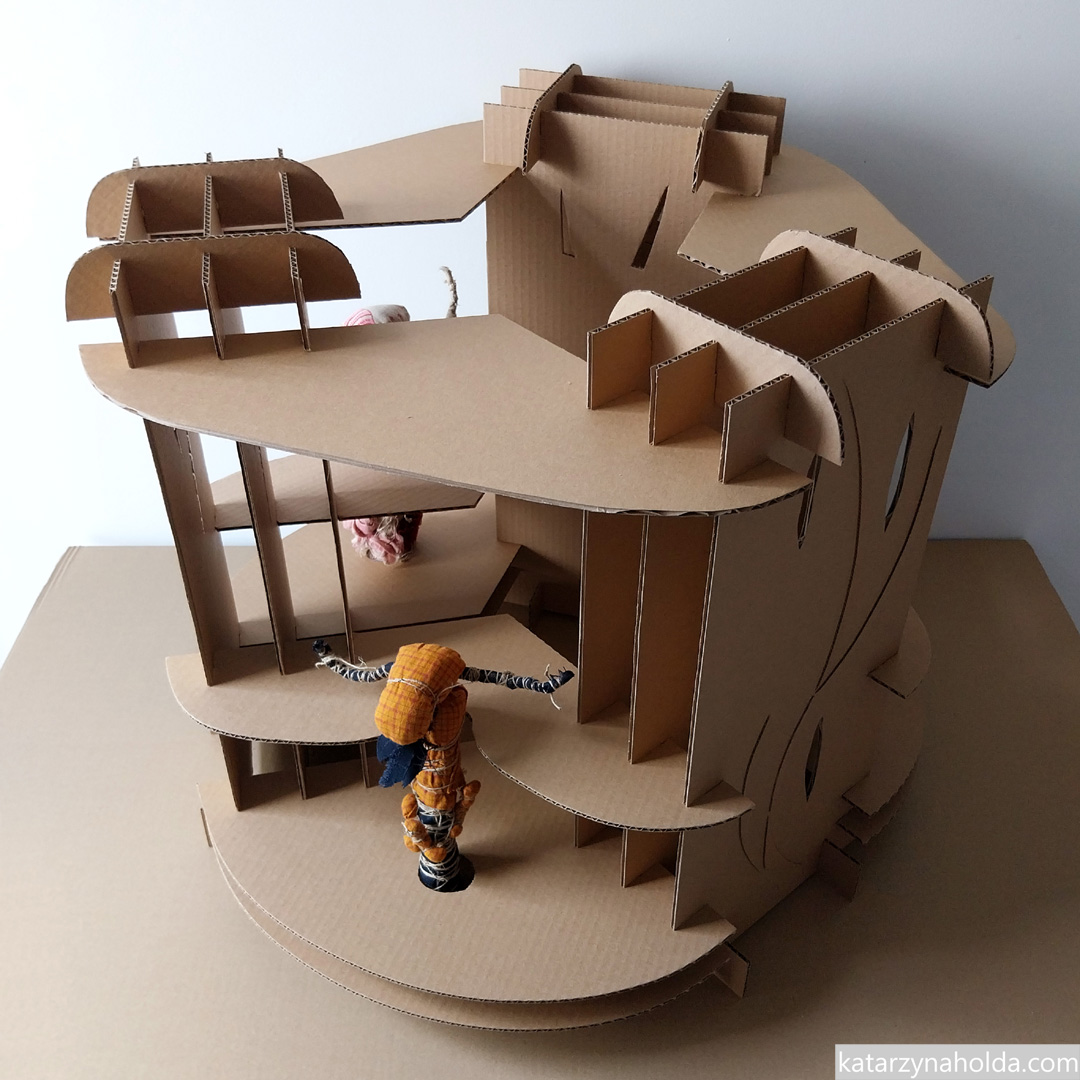
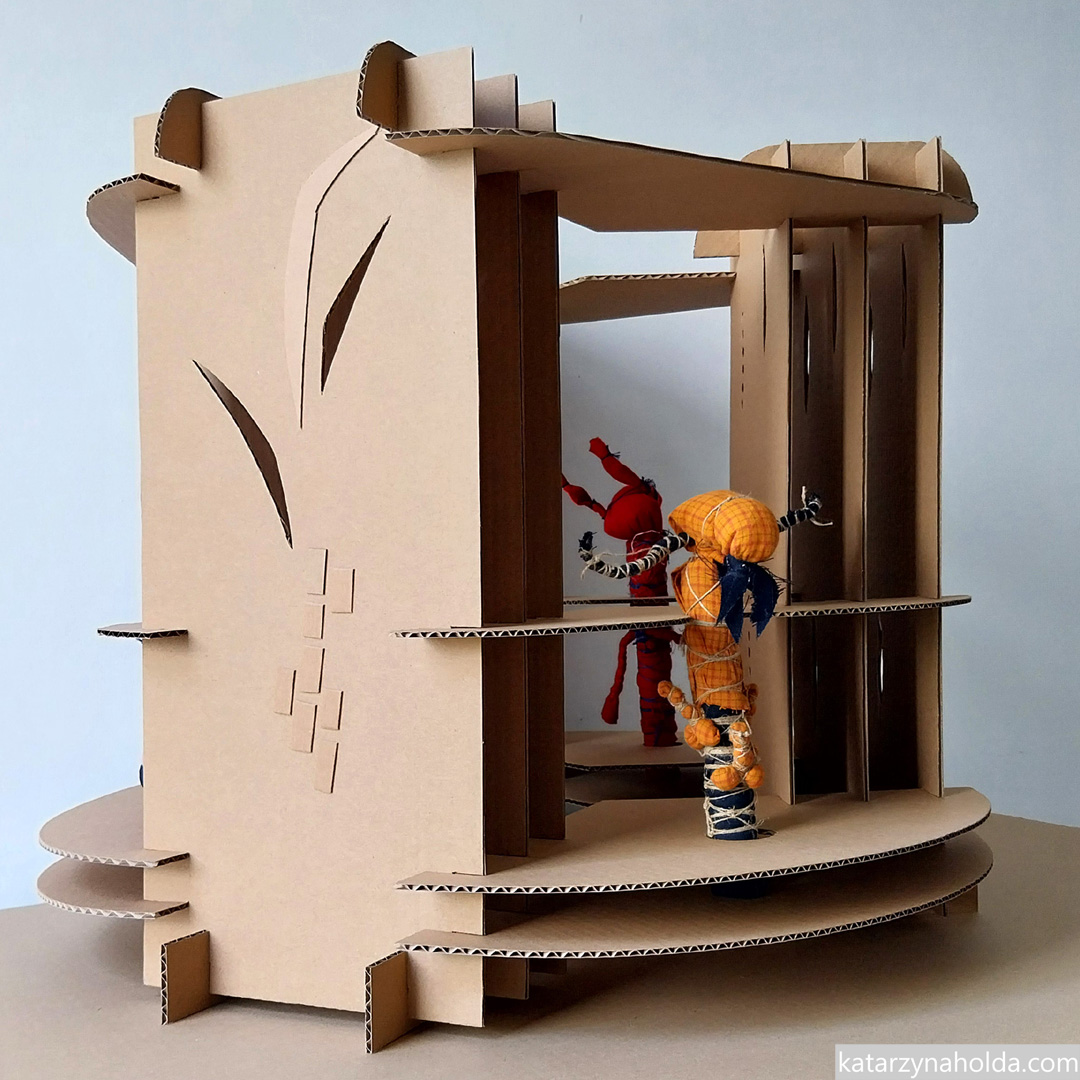
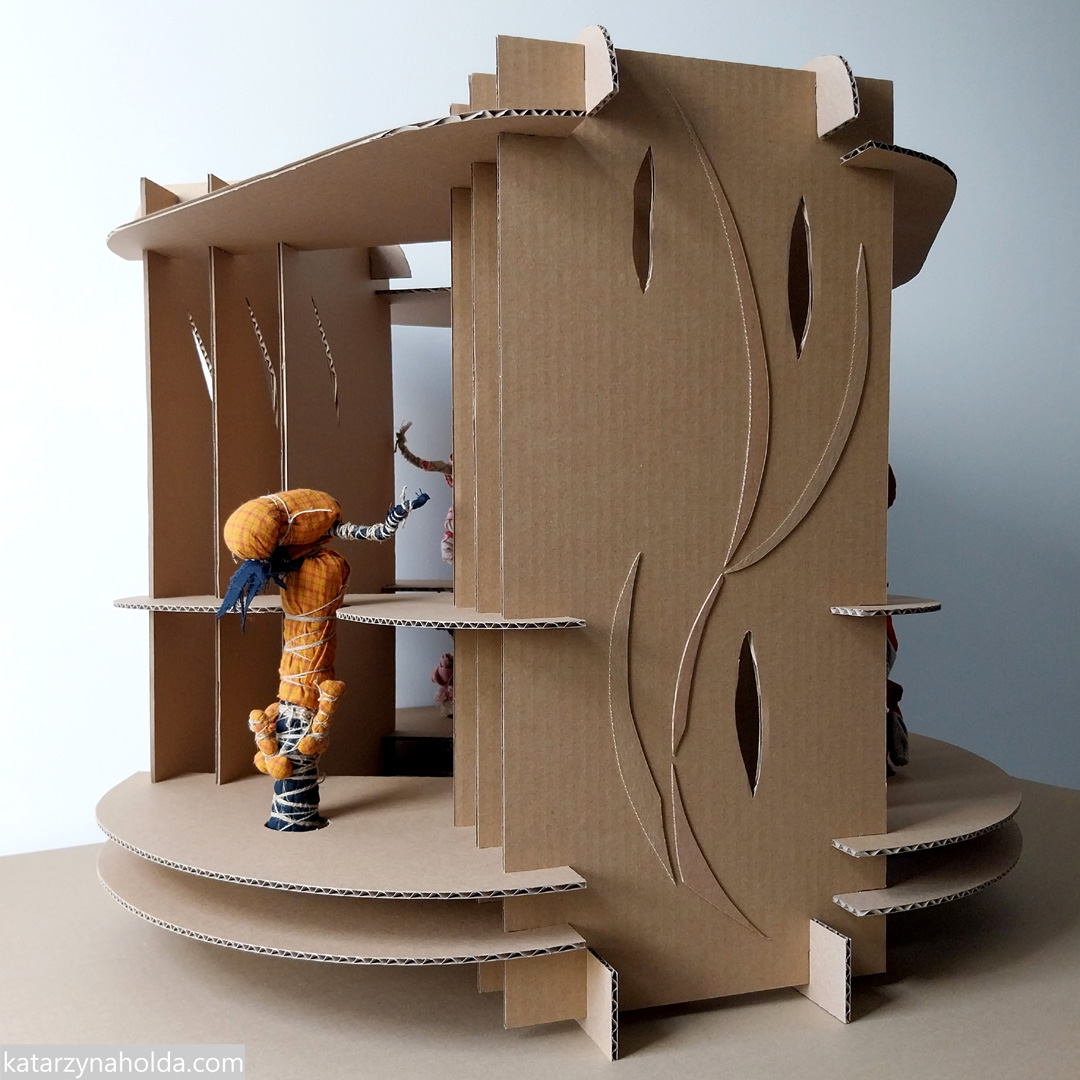
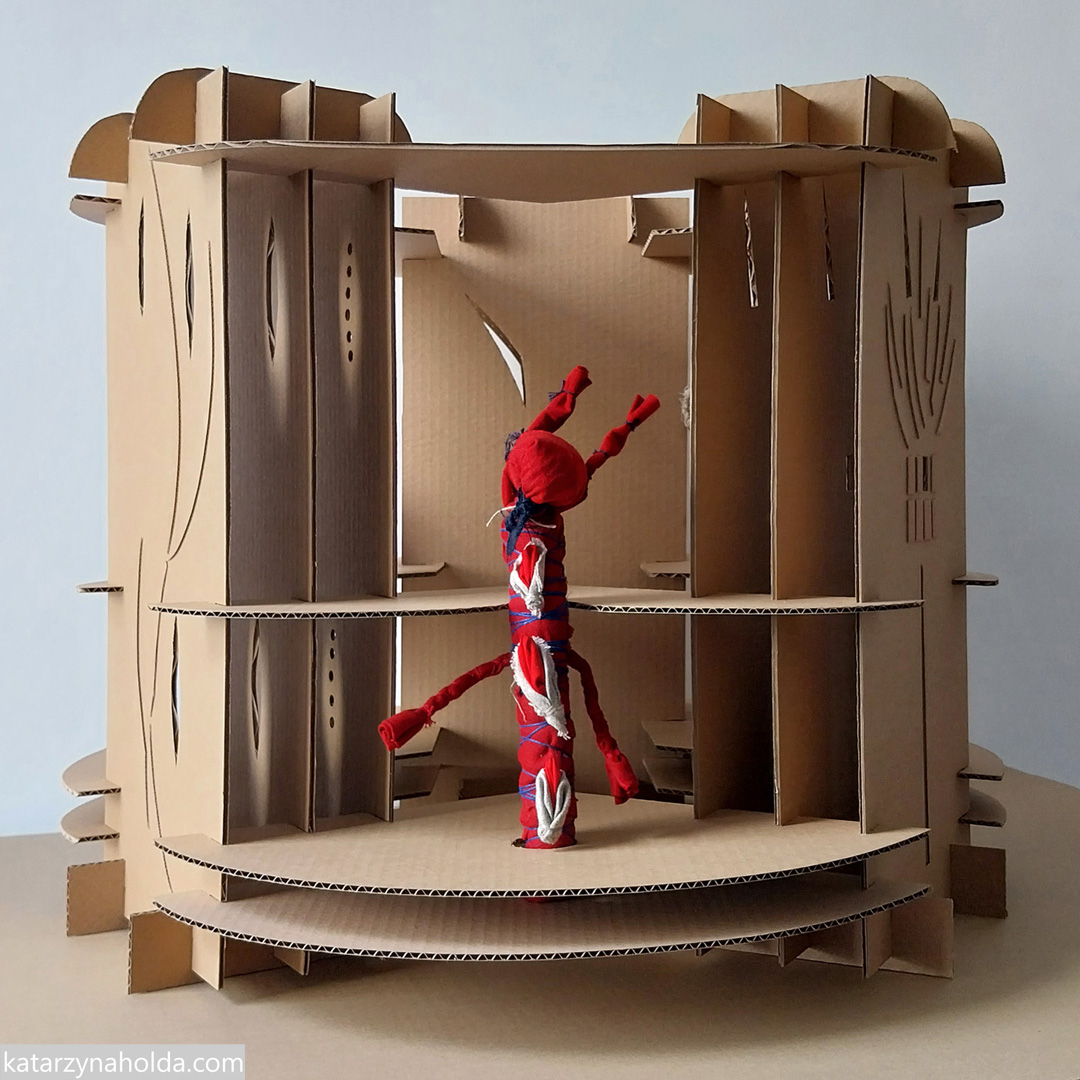
Motankas – Slavic folk magic dolls. They usually depict a human figure, especially a woman. My motankas are animals symbolising the forces of nature – thus emphasising that the idea of Bios and Zoe is not anthropocentric: at the centre of the world is the ecosystem, not man.
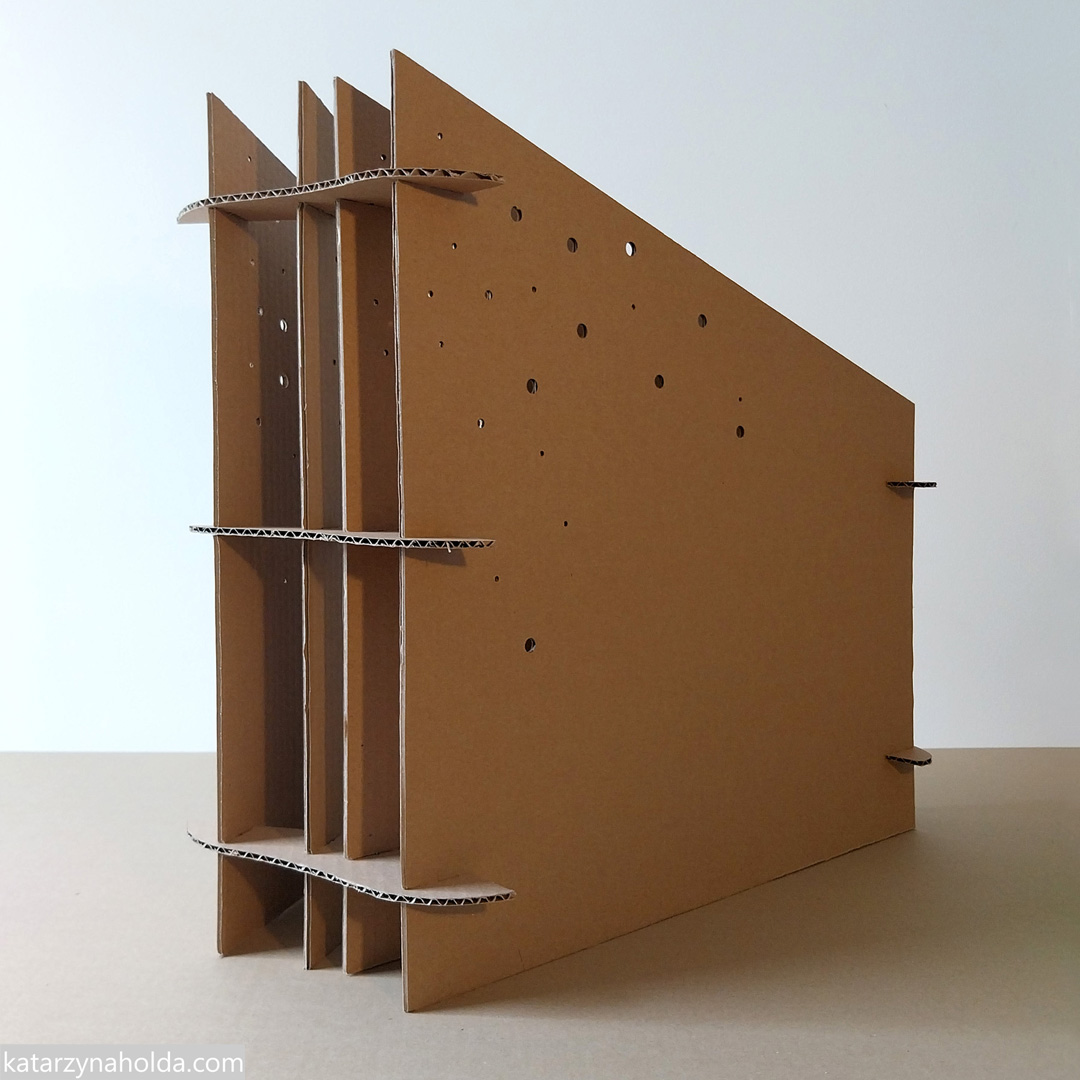
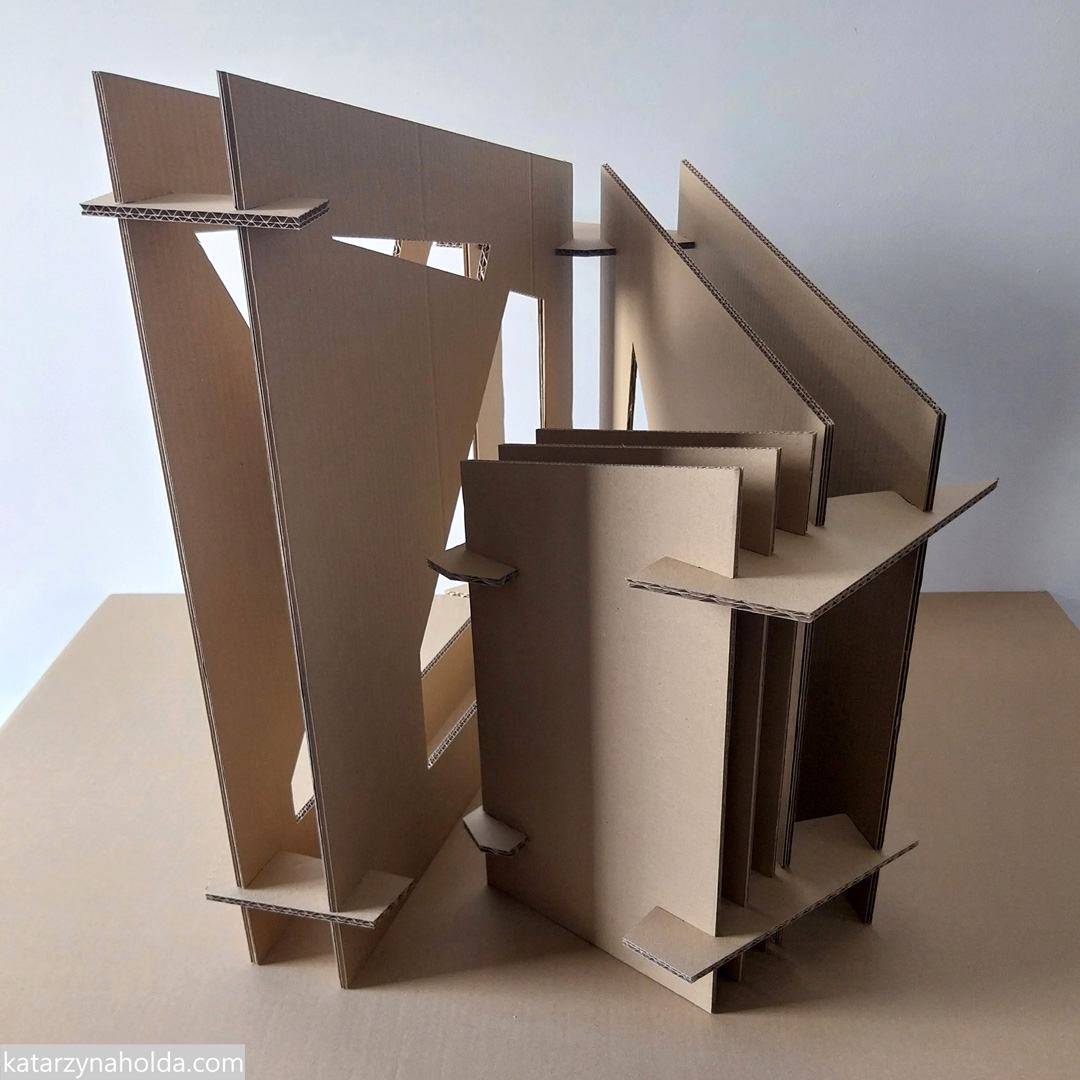
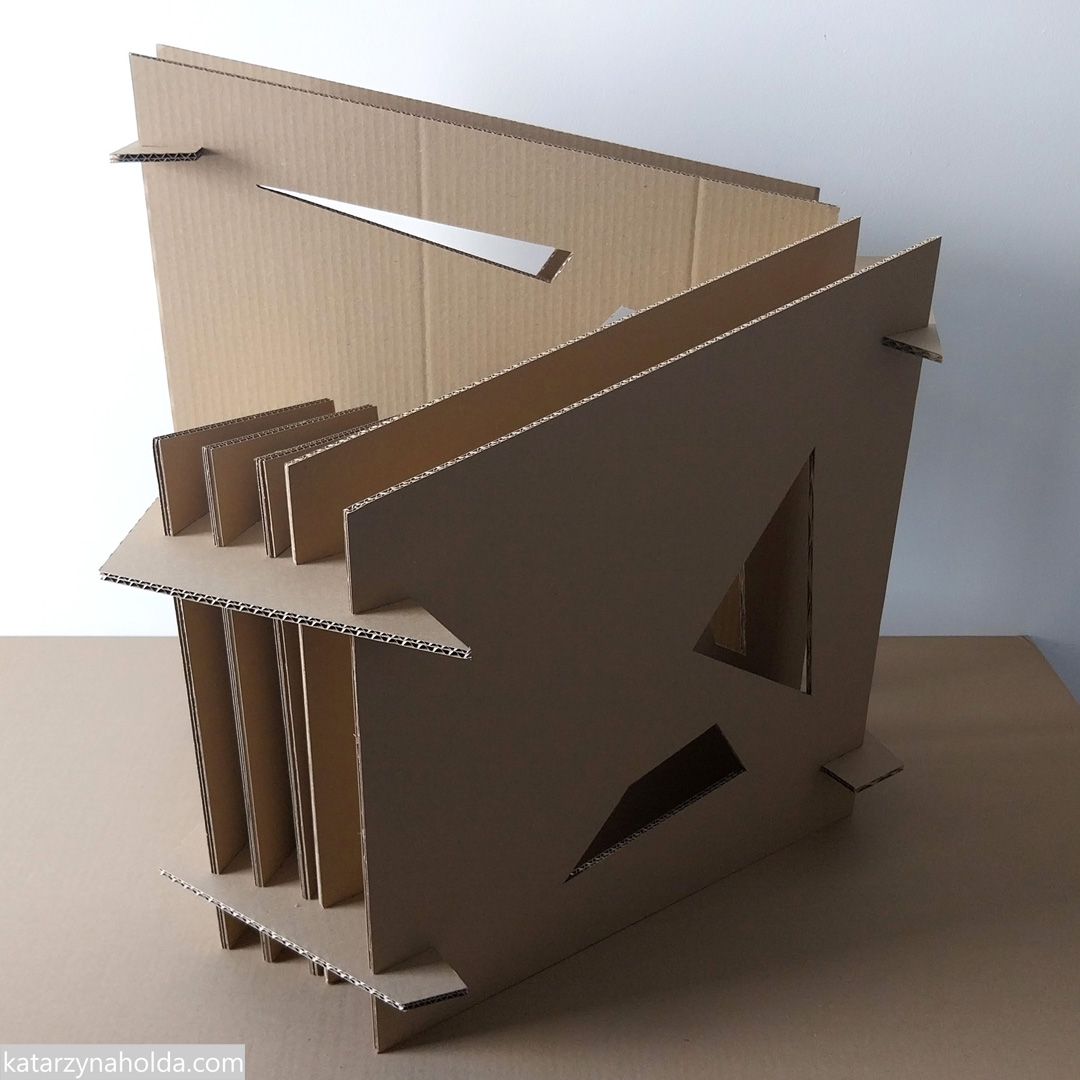
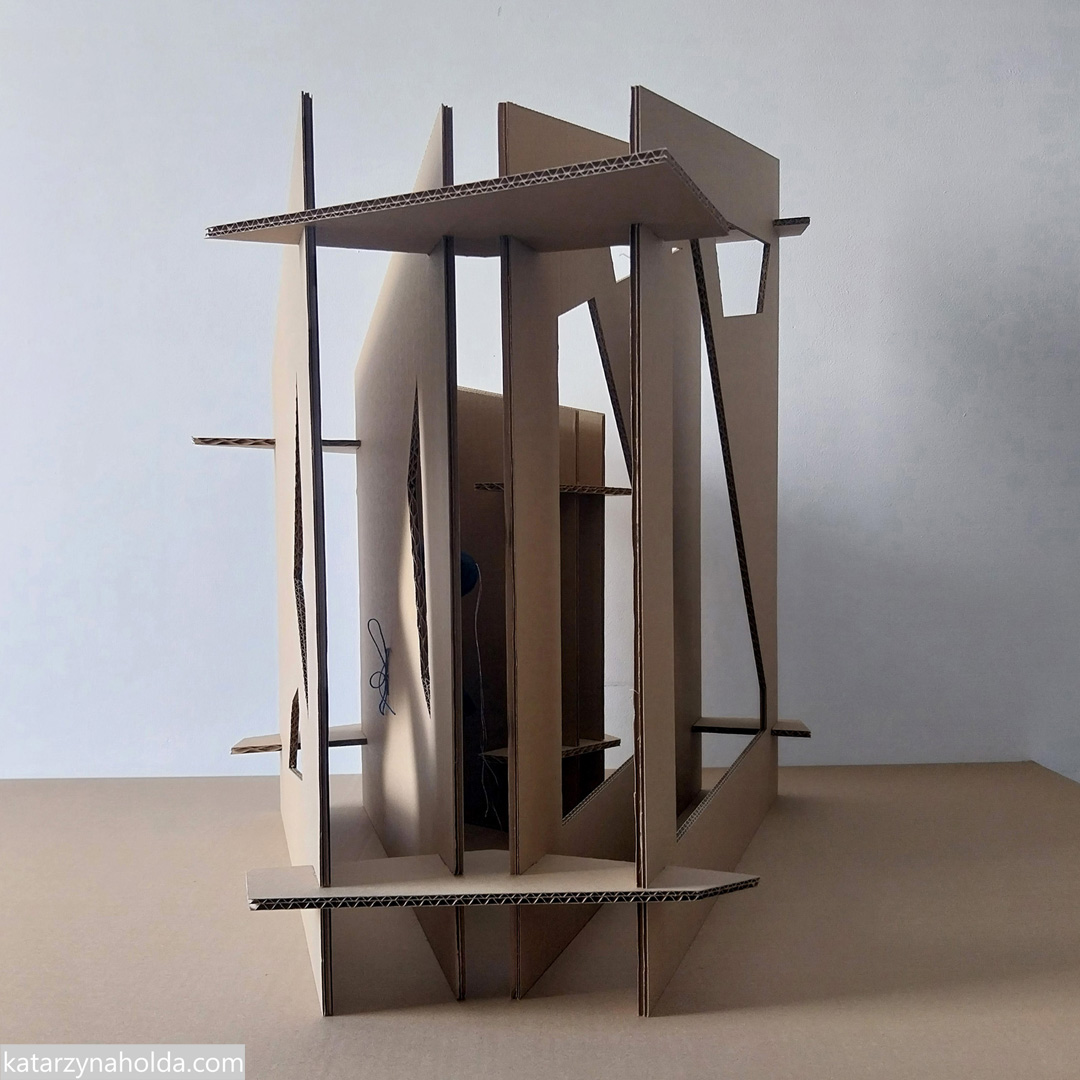
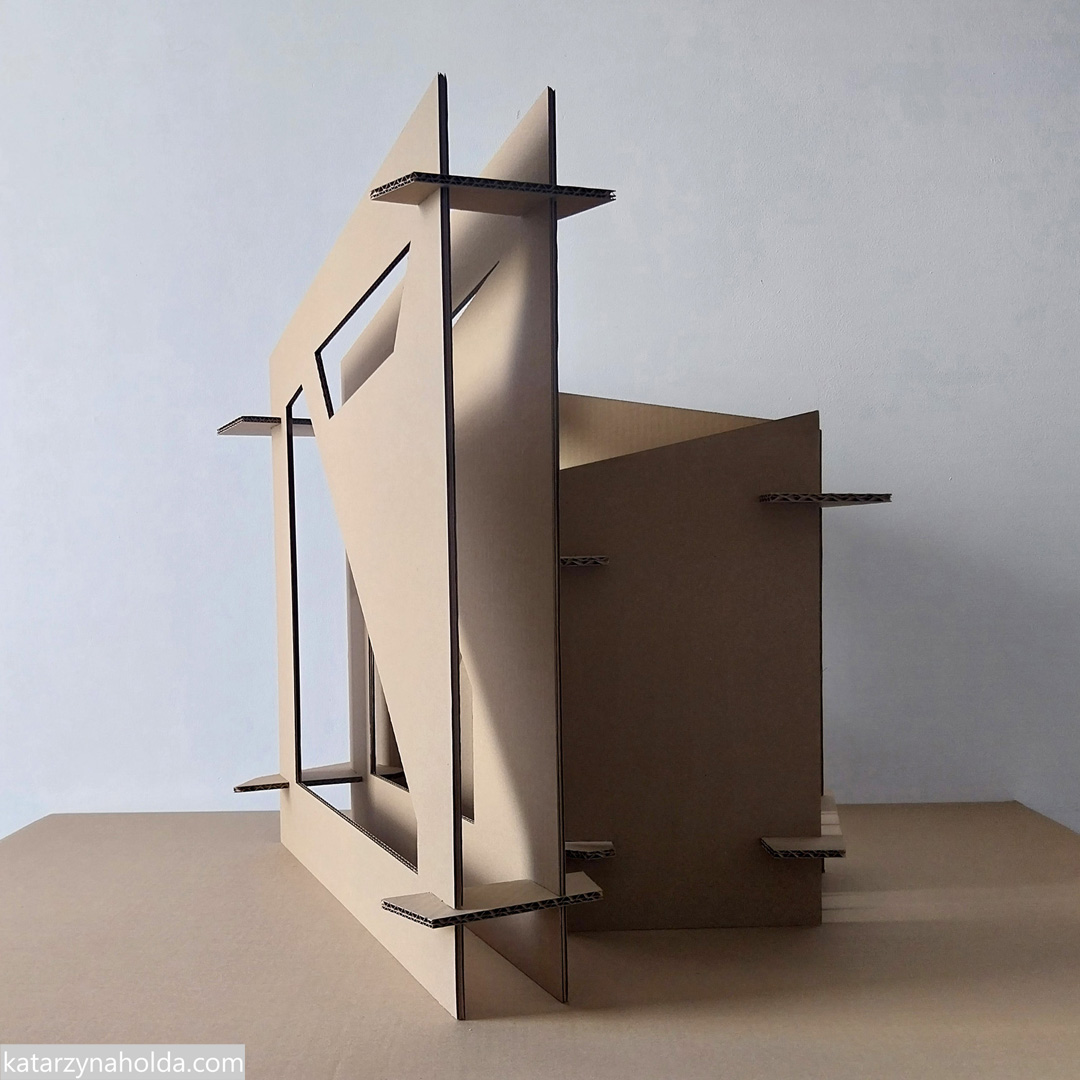
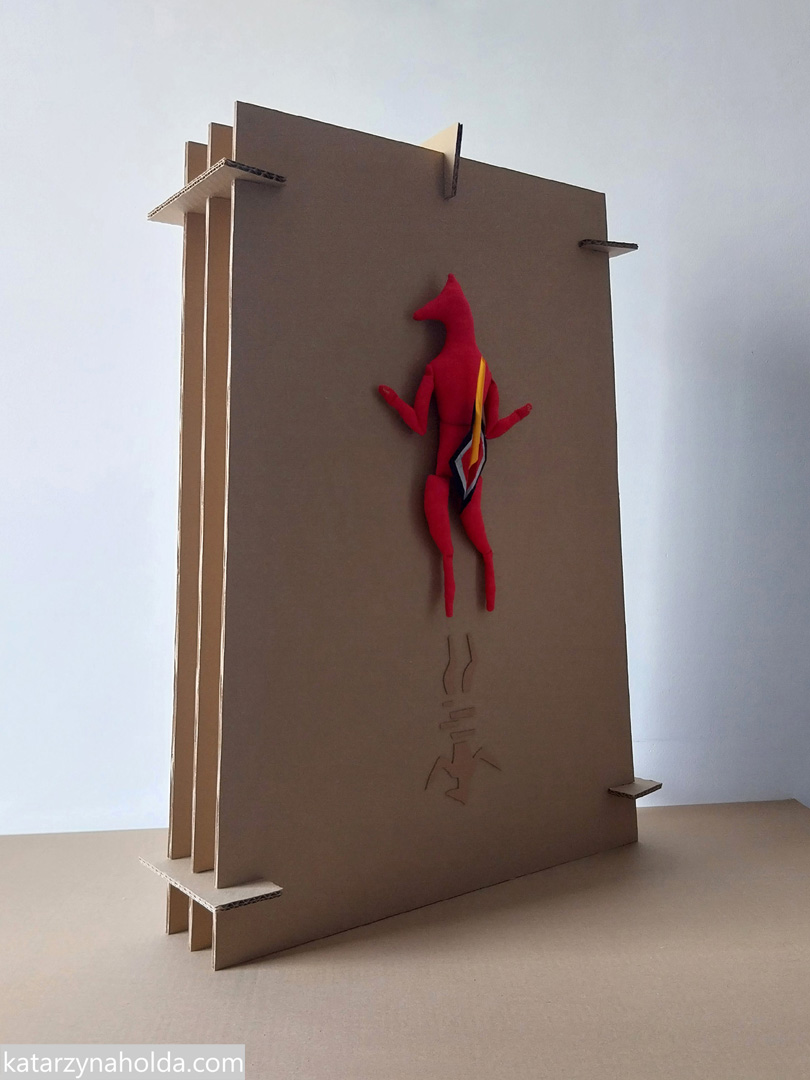
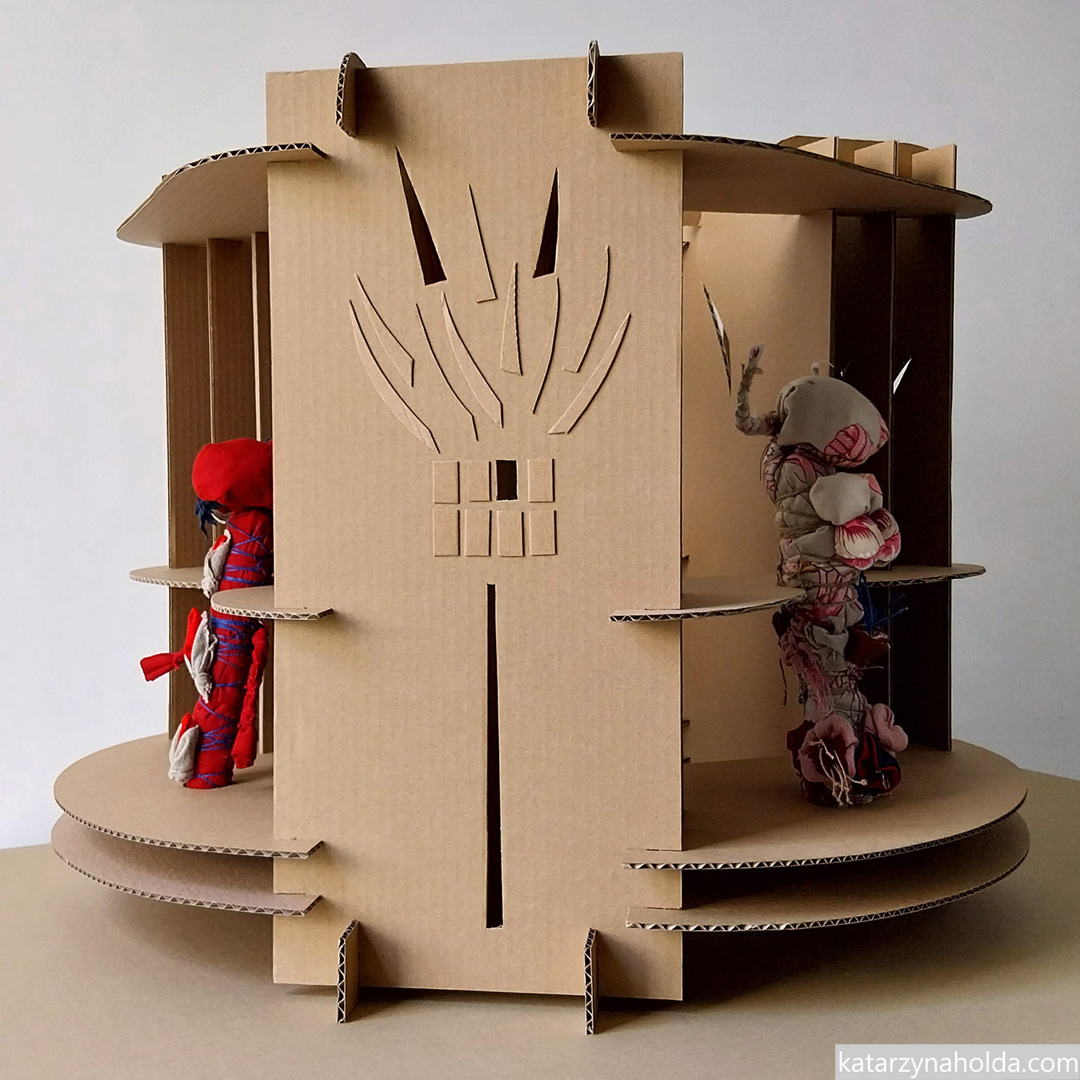
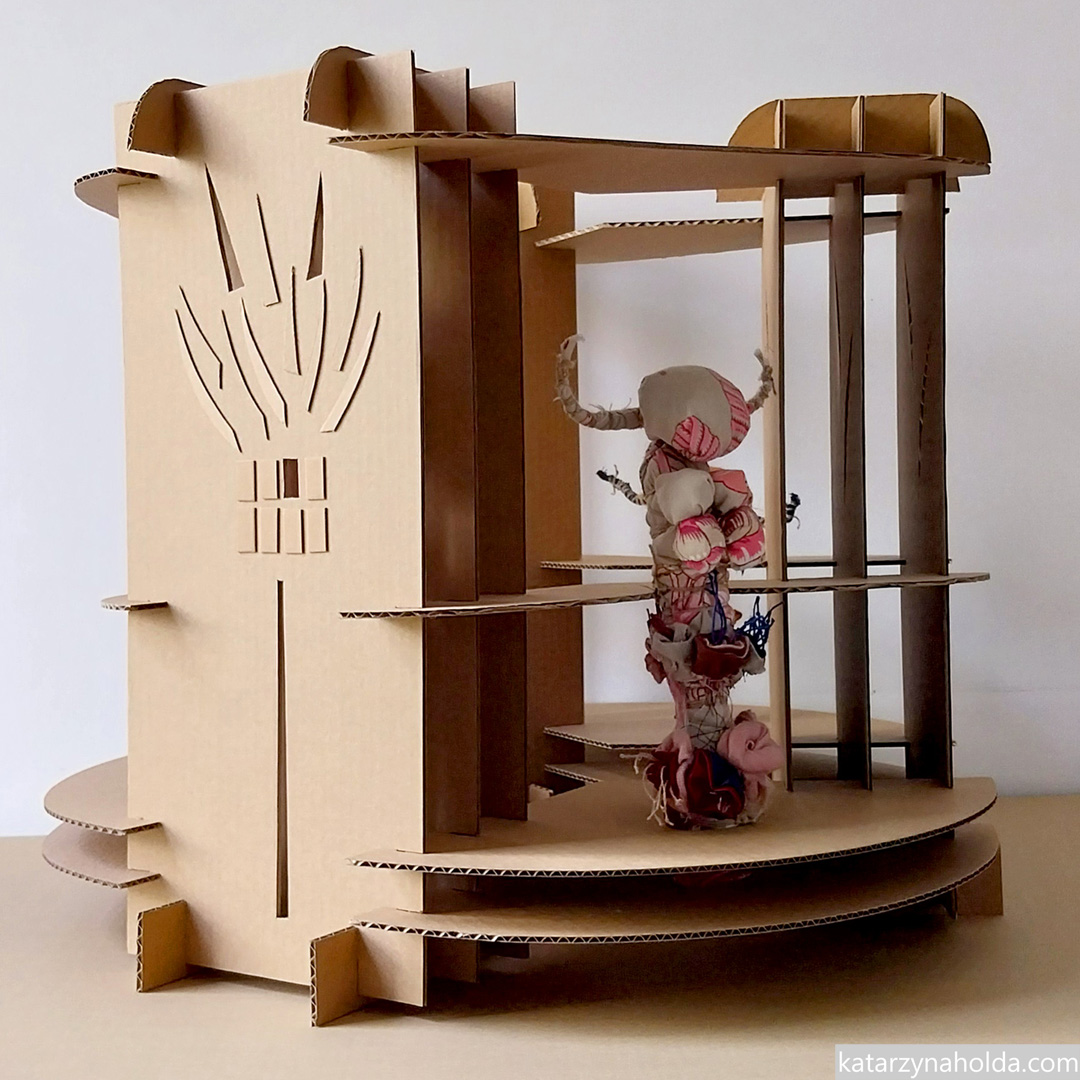
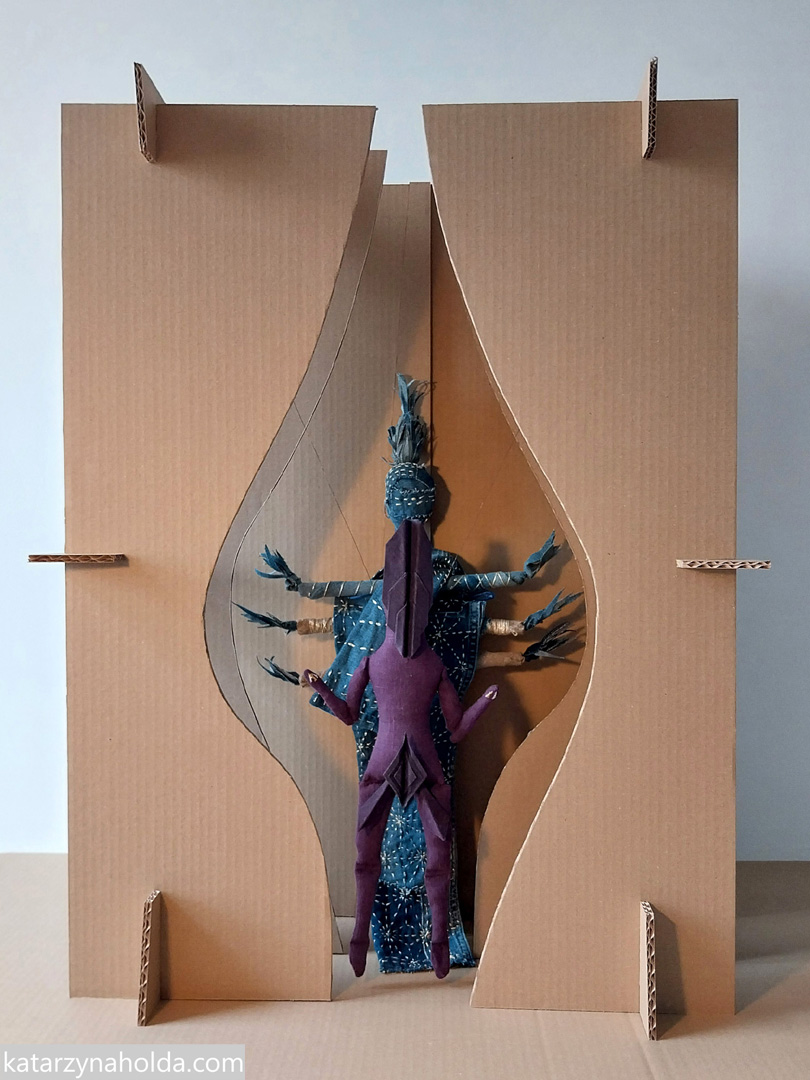
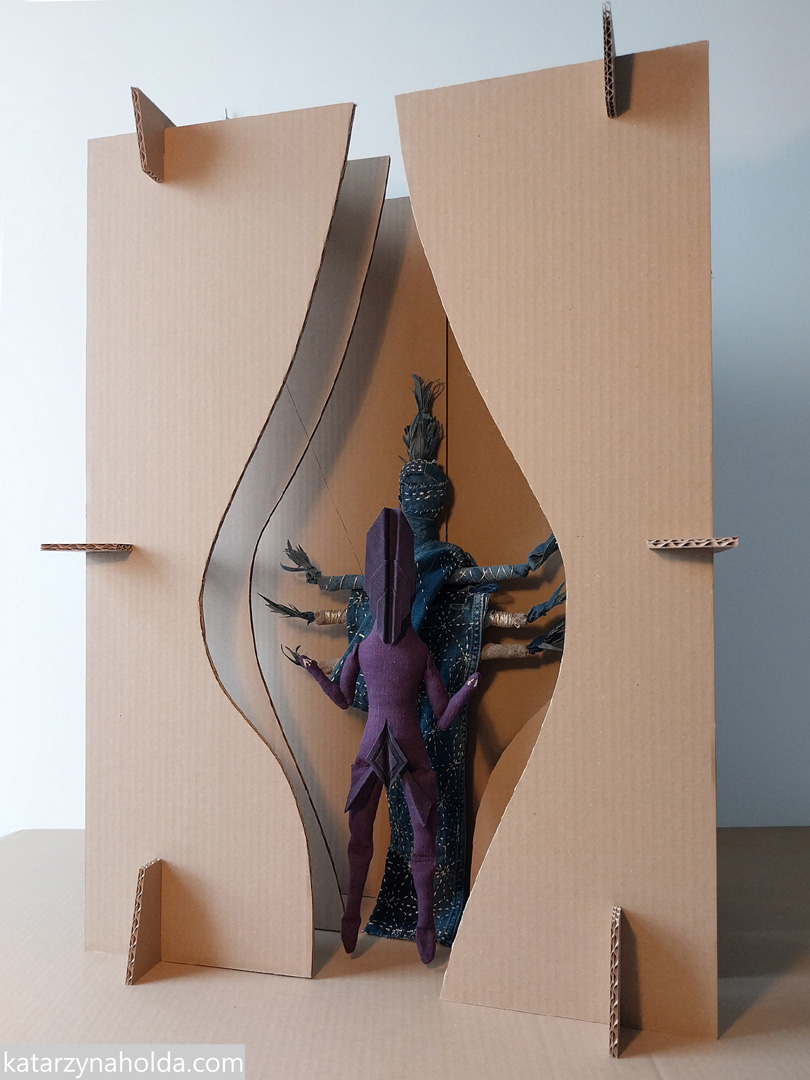
Matter, or Bios, always has a structure, a structure. If we want to show the animation of the Bios by Zoe, we can present some structure, and in it we can place the symbol of the animating force. As symbols of animating forces in nature, I placed the motes in scenographs – spatial structures that symbolise mortal matter.
Katarzyna Hołda uzyskała stopień doktorki sztuk plastycznych w 2025r. na Wydziale Artystycznym UMCS w Lublinie. Praca doktorska Hołdy pt. Bios i Zoe zawiera malarstwo, obiekty (lalki w scenografiach) oraz rozprawę teoretyczną.
Promotor: dr hab. Kamil Stańczak, UMCS Lublin.
Recenzentki, recenzent: prof Jadwiga Sawicka, UR Rzeszów; prof Iwona Demko, ASP Kraków; prof Jan Mioduszewski, ASP Warszawa.
Cykl Bios i Zoe nawiązuje do starogreckiej koncepcji życia jako przenikania się dwóch elementów: Bios i Zoe. Bios – życie śmiertelne, materialne. Zoe – niematerialna, święta i wieczna energia życiowa, która bezustannie odradza się w Bios; wciela się w dowolną materię, a po jej śmierci – w kolejną. Nie ma tu osobowego bóstwa jako odrębnego bytu; bóstwem jest samo życie i natura.
Dziś, w chwili przełomu kultury europejskiej, poszukujemy nowego paradygmatu religijnego. Aby budować nową metaforę religijną możemy sięgać do tradycyjnych motywów naszej kultury, takich jak symbole, folklor, święta czy obrzędy.
Dziady i Noc Kupały (Świętojańska) to święta uniwersalne, o korzeniach przedchrześcijańskich. Noc Kupały to święto przesilenia letniego, odnosi się do bujności natury i płodności – jest to zatem święto odradzania się materii – święto Bios. Dziady to święto zmarłych i reinkarnacji – odradzania się dusz przodków i naszej własnej w kolejnych bytach ludzkich, zwierzęcych i wszelkich innych. Dziady są więc świętem Zoe.
Maski na obrazieDziady symbolizują dusze naszą i naszych przodków. Płomienie ognia na obrazach Dziady i Noc Kupały symbolizują Zoe oraz duszę. Kalejdoskop w Dziadach jest symbolem odradzania się życia za każdym razem z tej samej materii, która umierając i odradzając się za każdym razem tworzy inną formę.
Obraz Prządka nawiązuje do bogiń życia, śmierci i losu. Boginie te pojawiają się pod postacią trzech prządek, np. w mitologii greckiej. Bogini- prządka – czy też bogini fatum – pojawia się też w baśni o Śpiącej Królewnie – jako stara kobieta z wrzecionem. Obracające się wrzeciono jest tu symbolem koła życia.
SZKICE MALARSKIE
Do cyklu Bios i Zoe należą szkice koncepcyjne, które tworzyłam wymyślając prace docelowe. Szkice te pokazują proces twórczy, metodę dochodzenia do rozwiązań.
OBIEKTY - MOTANKI W SCENOGRAFIACH
Motanki – słowiańskie ludowe lalki magiczne. Zwykle przedstawiają postać ludzką, zwłaszcza kobietę. Moje motanki to zwierzęta symbolizujące siły natury – podkreślam w ten sposób, że idea Bios i Zoe nie jest antropocentryczna: w centrum świata jest ekosystem, a nie człowiek.
Materia, czyli Bios, zawsze ma swoją budowę, strukturę. Jeśli chcemy pokazać animowanie Bios przez Zoe możemy przedstawić jakąś strukturę, a w niej umieścić symbol siły ożywiającej. Motanki, jako symbole sił animacyjnych w naturze, umieściłam w scenografiach – przestrzennych konstrukcjach, które symbolizują śmiertelną materię.
painting
Prządka/ Spinner
acrylic on canvas, 40x50cm, 2023
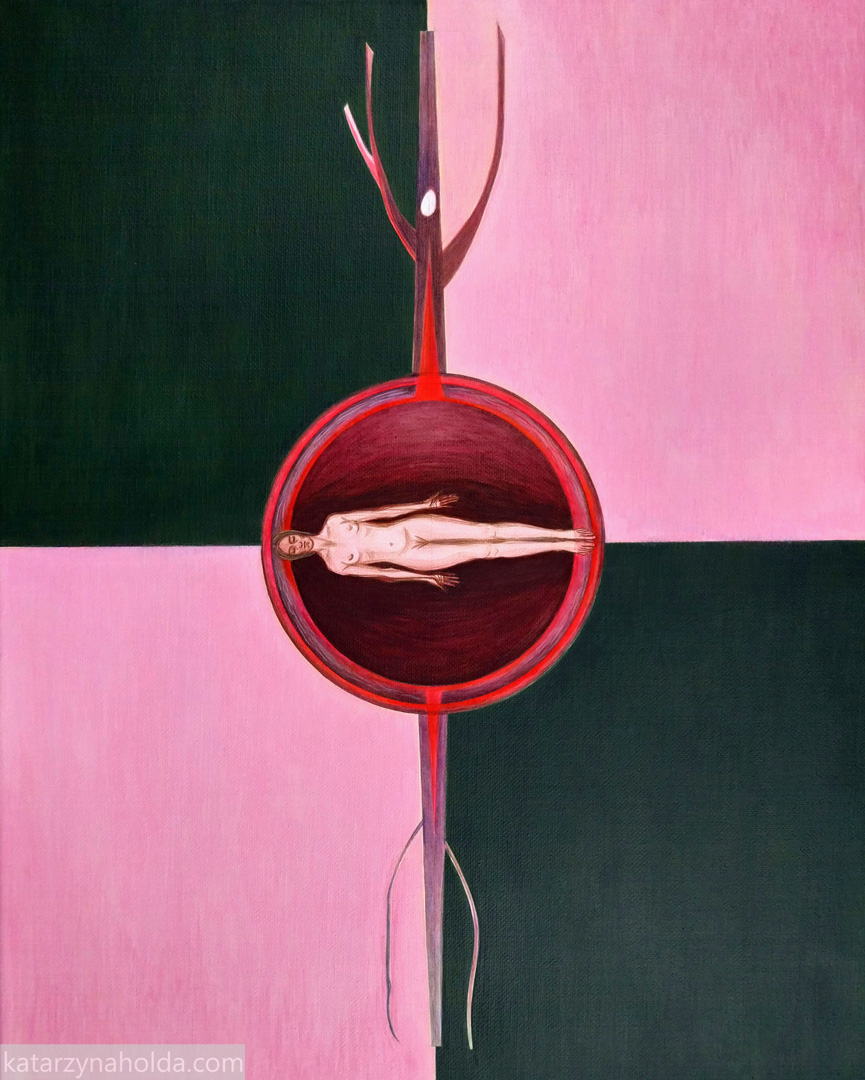
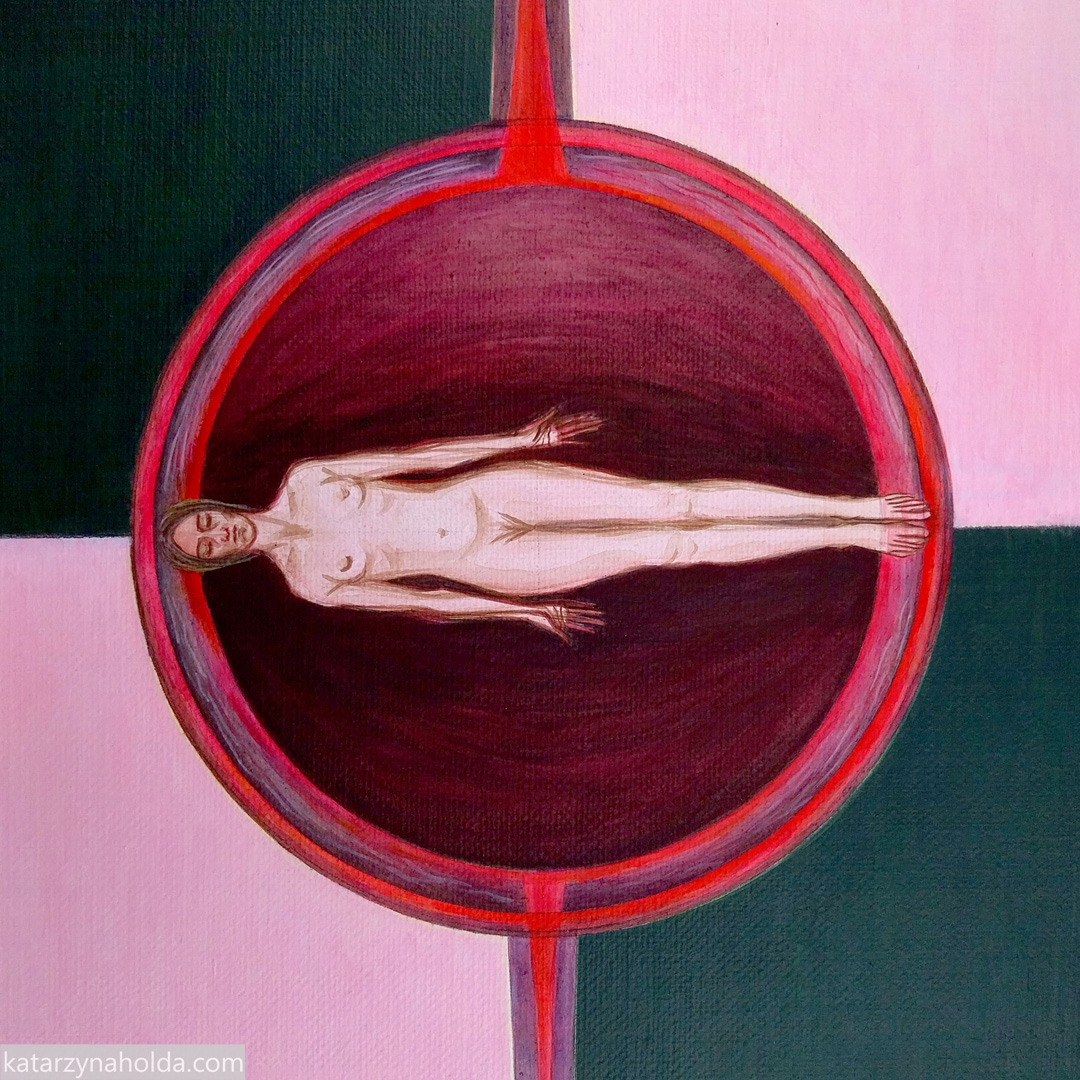
Kora w Mandali
acrylic on canvas, 40x50cm, 2023
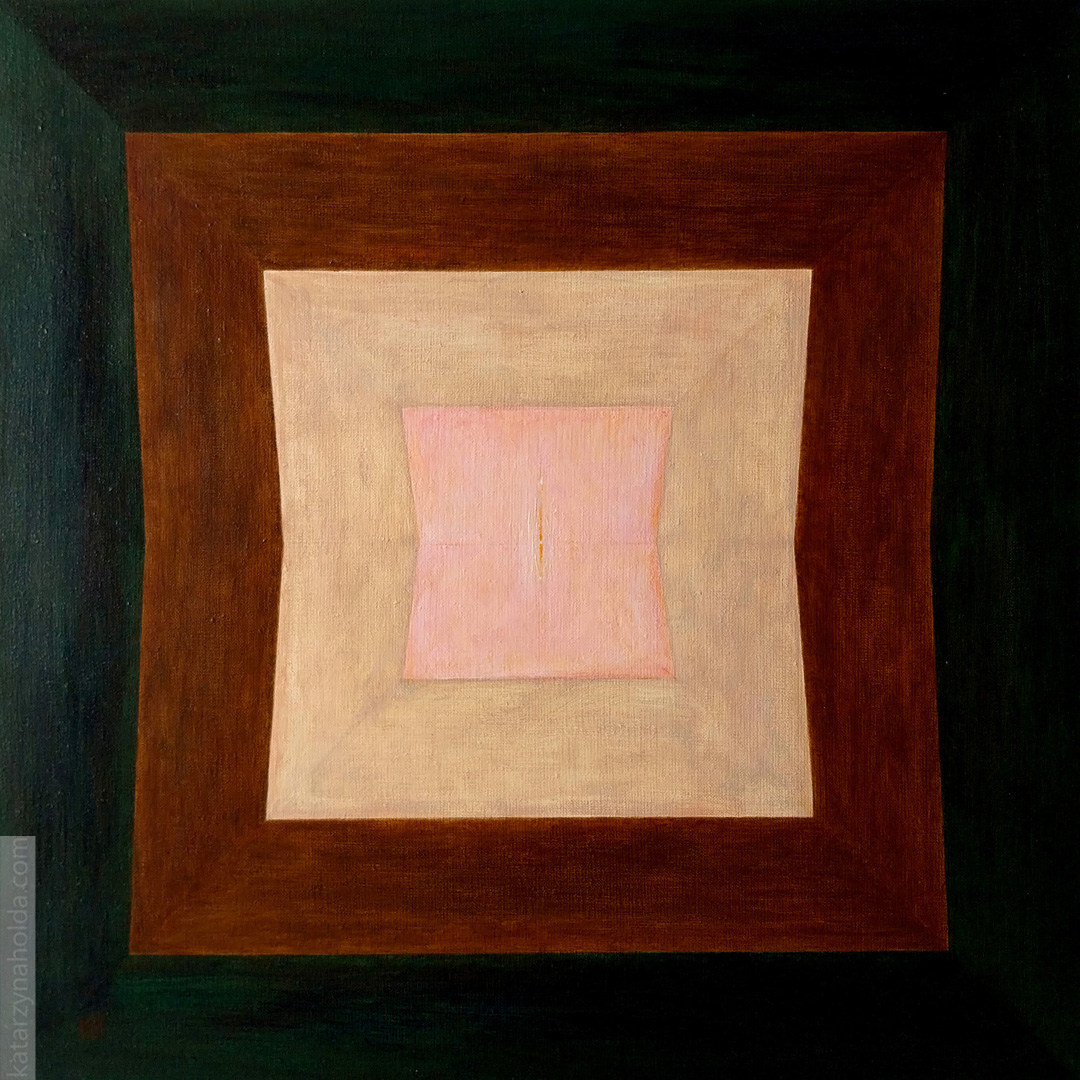
Noc Kupały
acrylic on canvas, 50x50cm, 2023
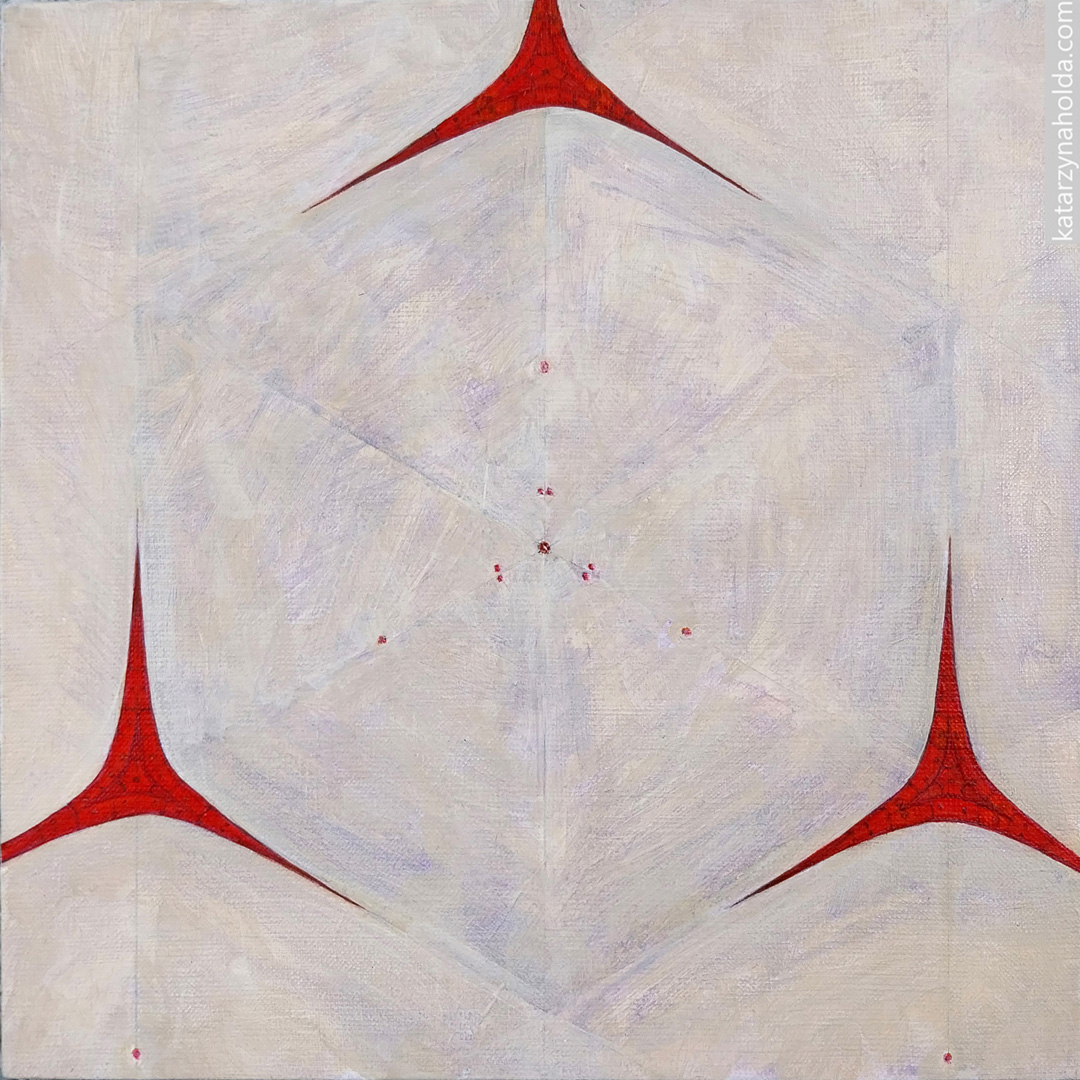
Roślina w Kalejdoskopie
acrylic on canvas, 30x30cm, 2023
Dziady / Forefathers
acrylic on canvas, 85x85cm, 2024
detale / details
Kora w Mandali - detal
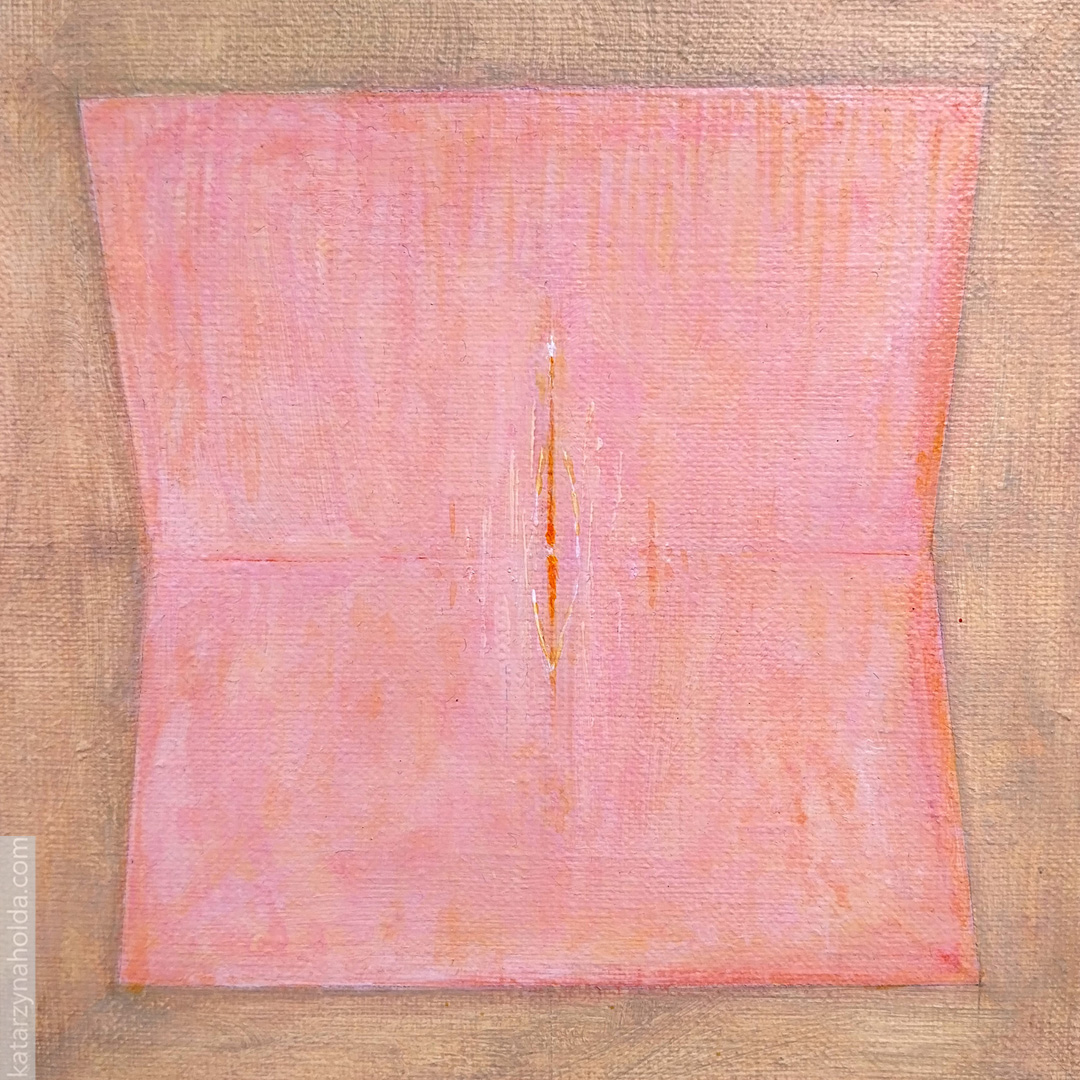
Noc Kupały - detal
szkice do obrazu Noc Świętojańska/ sketches for the painting Kupala Night
Słońce z jęzorem na szarym tle
acrylic on canvas, 30x30cm, 2023
Słońce z jęzorem na brązowym tle
acrylic on canvas, 30x30cm, 2023,
in private collection
Słońce tarotowe
acrylic on canvas, 30x30cm, 2023
Słońce-Koń w Noc Świętojańśką
acrylic on canvas, 30x30cm, 2023
szkice do obrazu Dziady/ sketches for the painting Forefathers
Żółta postać z jęzorem na szarym niebie
acrylic on canvas, 30x30cm, 2023
Różowa Dusza
acrylic on canvas, 30x30cm, 2023
Brązowa Dusza
acrylic on canvas, 30x30cm, 2023
Autoportret - szkic
acrylic on canvas, 30x30cm, 2023
Autoportret - Maska I
acrylic on canvas, 30x30cm, 2023
Autoportret - Maska II
acrylic on canvas, 30x30cm, 2023
Maska z płomieniem na czarnym tle
acrylic on canvas, 30x30cm, 2023
Maska z płomieniem na czerwonym tle
acrylic on canvas, 30x30cm, 2023
Maska z płomieniem na żółtym tle
acrylic on canvas, 30x30cm, 2023
Maska z płomieniem - Kot
acrylic on canvas, 30x30cm, 2023
Maska Człowiek-Kot na żółtym tle
acrylic on canvas, 30x30cm, 2023
Maska Człowiek-Kot na czerwonym tle
acrylic on canvas, 30x30cm, 2023
Maska Człowiek-Kot czerwono-niebieska
acrylic on canvas, 30x30cm, 2023
Maski w kalejdoskopie w kolorach podstawowych
acrylic on canvas, 30x30cm, 2023
Maski w kalejdoskopie fioletowe I
acrylic on canvas, 30x30cm, 2023
Maski w kalejdoskopie fioletowe II
acrylic on canvas, 30x30cm, 2023
dolls
Słońce
tarot doll
linen canvas, embroidery, h 35cm, 2023
Guślarka (Kapłanka)
tarot doll
linen canvas, embroidery, h 43cm, 2023
Dusza (Cebulka)
motanka doll
jeans, linen canvas, linen cord, embroidery, gold cordage, h 60cm, w 34cm, 2024
Pajęczyca Mała
motanka doll
wool, linen cord, h 17,5cm, w 20cm, 2023
Pajęczyca Duża
motanka doll
linen canvas, linen cord, tulle, embroidery floss, h 27,5cm, w 23cm, 2023
Koza
motanka doll
linen canvas, linen cord, h 34,5cm, w 23cm, 2023
Kozioł
motanka doll
cotton, wool, linen cord, h 27cm, w 21,5cm, 2023
Krowa
motanka doll
cotton, linen canvas, linen cord, h 36cm, w 19,5cm, 2023
Ćma
motanka doll
wool, tulle, glass beads, linen cord, h 22cm, w 28cm, 2023